
Best Kids Attractions Ras Al Khaimah
Are you looking for the most enjoyable activities for kids within Ras Al Khaimah for your next family trip? Ras Al Khaimah has many options for…
Read moreA variety of methods called techniques are used to shape clay into pottery. These include hand building, wheel throwing, molding, and slip casting. Mastering and becoming familiar with these techniques builds your confidence in shaping clay into any form and gives you the freedom to unleash your creativity. These methods are simple to understand and may differ from person to person depending on an individual’s experience in pottery.
At Creative Hands Pottery Studio in Ras Al Khaimah, people of all age groups may learn different pottery skills and unleash the potter in them. They may experience the immense happiness and satisfaction of creating something with their hands.
Unlike wheel throwing, which requires special skills, hand building is considered the easiest and the oldest pottery making technique. The method requires no equipment other than hands and simple tools to shape the clay into the desired form.
Due to its nature, it gives the artist the freedom to experiment with different design ideas and three-dimensional forms. This makes it a perfect technique for beginners.
Although hand building has numerous methods, the most common ones are:
To make pinch pottery, you roll a piece of clay into a ball and then shape it into a bowl by pinching it between your fingers. The technique can be used to make bowls, cups and other similar small objects.
Using this technique, you roll out long and thin pieces of clay and then connect them to each other to create shapes. This technique is used to make larger objects.
This technique is similar to coil building, except that instead of rolling long and thin pieces of clay, you roll clay into thin sheets. The clay sheets are then connected to each other to create shapes.
Using this technique, you can make more structured objects like boxes.
Wheel throwing is a method of shaping clay on a turning wheel. Once the clay is centered on the wheel, the potter uses their hands to mold and shape the clay while it spins.
For novices, wheel throwing is an enjoyable and relatively easy pottery making technique. However, maintaining the right balance while throwing the clay is a challenge and takes a lot of practice.
Preparing the clay: To make the texture of the clay smooth and consistent throughout, get rid of air bubbles by kneading the clay.
Centering: Put the clay on the center of the wheel.
Opening: Make a hole in the center of the clay.
Pulling: Make a wall by pulling the clay up and out from the center.
Shaping: Pull the clay to make the walls of the desired height and width.
Finishing: The piece can be trimmed, glazed and fired after it is dried.
As you learn wheel throwing, you develop your patience, hand-eye coordination, creativity, and appreciation for art and pottery.
Slip casting is a pottery technique where liquid clay, or slip, is used to create shapes within a plaster mold.
To make a ceramic piece using this technique, liquid clay is added to a mold. The plaster absorbs the moisture of the slip and starts to form a firm layer of clay within the mold. Any excess slip is removed, and the clay is allowed to completely dry and harden before it’s removed from the mold.
Slip casting is widely used in ceramic manufacturing to mass produce identically shaped pieces with refined detailed designs.
Slip casting is ideal for producing multiple identically shaped ceramic pieces.
Molding is a method of pottery in which a mold is used to prepare a particular design. Shaping the mold completely by hand or by a potter’s wheel can be avoided by using the mold.
Different types of molds can be used, depending on the detail required in the design.
Also like to read, clay molding class
Press Molding: When a design is created by pressing clay into a mold.
Hump Molding: When a design is created by curving an external mold and pressing the clay over it.
Slump Molding: When a design is created by pressing clay over a mold and curving it to create a hollow object.
Molding is useful for the production of decorative ceramic articles and shapes of repetitive objects.
In pottery making, decorating the surface of an article is as important as shaping it. After shaping a ceramic article, its surface can be designed in several ways.
Some decorations are made before the first firing and others after.
Bisque Painting: After the first firing, colors can be painted on pottery and designs created in a myriad of ways. This method is called bisque painting.
Graffito: Decorations can be scratched into a colored slip or underglaze to reveal a design underneath.
Texturing: A decoration can be impressed onto a surface of clay using stamps, and/or carving tools and/or natural items such as seashells, leaves and/or other objects to create various textures.
Glazing: A design can be decorated on pottery and a final firing is done to melt the glaze and harden it.
Pottery painting is a fun and unique way to decorate individualized ceramics.
The choice of pottery technique depends on your preferences and the kind of ceramic pieces you want to create. The experience of beginners also differs depending on the kind of ceramic pieces they want to create.
Hand-building techniques enable beginners to create ceramic pieces at their own pace and allow them to explore the properties of clay and various shapes. You can also create ceramic pieces using the wheel, but it is more involved since you have to learn to throw the clay evenly on the wheel. Other people may prefer to paint the ceramic pieces after the process of bisque firing.
The process of creating ceramic pieces using different techniques differs. The most important thing is experimenting with various techniques to discover which one is most enjoyable for you.
Also like to read, Pottery techniques for beginner students
Creative Hands Pottery Studio is a great space for anyone wishing to explore the world of ceramics, kick-start their creative idea, and enjoy the fun of hands-on pottery experiences.
No experience is required to take up the adventure of pottery, as with guidance and practice one is able to refine certain skills and come up with unique clay creations.
Pottery has evolved over the years, and with the availability of pottery classes, it has now become easier for you to explore your creativity by learning how to throw on the pottery wheel, paint pottery, sculpt and mold clay and learn how to make ceramics.
Book a pottery class at Creative Hands Pottery Studio in Ras Al Khaimah today and start your journey of playtime with clay!
What are the main techniques used in pottery making?
The main techniques are handbuilding, wheel throwing, and mold making. Decorating techniques such as painting and slip trailing are other important features of pottery making.
Which pottery technique is easiest for beginners?
Handbuilding is simpler and less daunting for beginners as it uses simple tools and doesn’t require the use of a pottery wheel. Bisque painting is easy and fun for beginners.
What is the difference between hand building and wheel throwing?
In hand building, the artisan uses their hands to build up a piece of pottery and in wheel throwing a pottery wheel is used to build up a piece of pottery.
Can pottery be made without a pottery wheel?
Yes, pottery can be made using handbuilding techniques like pinch potting and coil building.
What materials are used in pottery making?
The main raw material is clay. Other materials that may be incorporated include water, pottery slips, underglazes, and decorating tools.
How long does it take to make a piece of pottery?
Time is dependent on the technique, size, and complexity of the piece. The actual shaping may take a relatively short time but other processes such as drying, trimming, glazing and firing take a relatively long time.
What is bisque painting in pottery?
Bisque painting, also known as underglaze decoration, is a technique where colors or underglazes are applied to pottery after the first firing. The decorated piece may then be glazed and fired again, depending on the material and firing requirements.
Where can I learn pottery making in Ras Al Khaimah?
Pottery classes and creative workshops are offered by Creative Hands Pottery Studio, Ras Al Khaimah. For more information, check their website for available sessions and bookings.
Pottery making is a creative art, and several techniques are available to shape, decorate, and transform the clay. From the traditional handbuilding and wheel throwing to pottery painting, molding, slipcasting, and several other techniques, each provides a way of creating a unique piece.
For a first-time potter or for someone wanting to develop creative skills, learning the various pottery techniques would surely make the experience worthwhile.
Creative Hands Pottery Studio in Ras Al Khaimah is a great place to visit and discover the various techniques of pottery making.

Book a 1.5-hour pottery session in Ras Al Khaimah, all materials included.
Are you looking for the most enjoyable activities for kids within Ras Al Khaimah for your next family trip? Ras Al Khaimah has many options for…
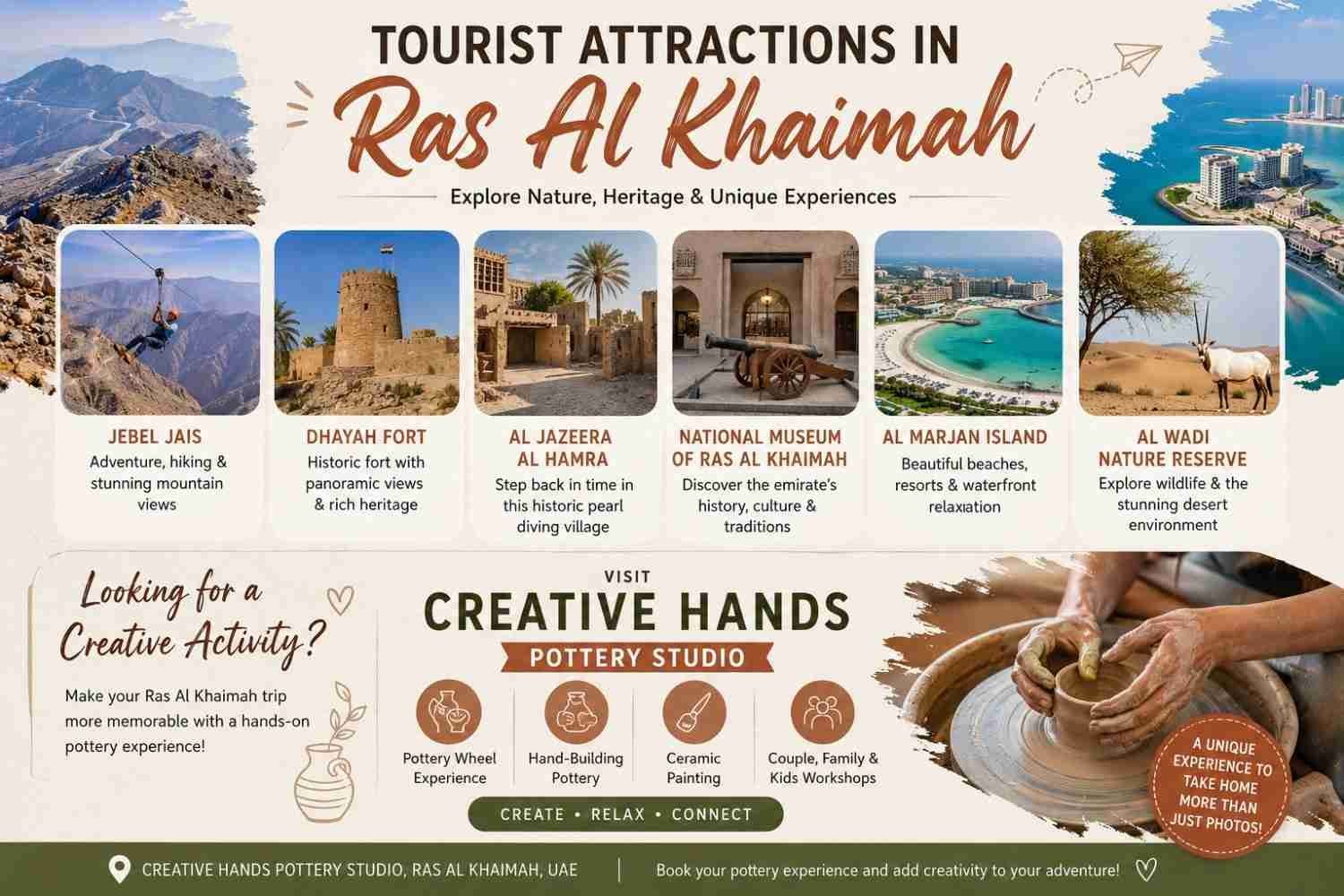
Read moreRas Al Khaimah is one of the most diverse destinations that offers a breathtaking mix of beaches, mountains, desert landscapes, traditional heritage sites and unique experiences.…
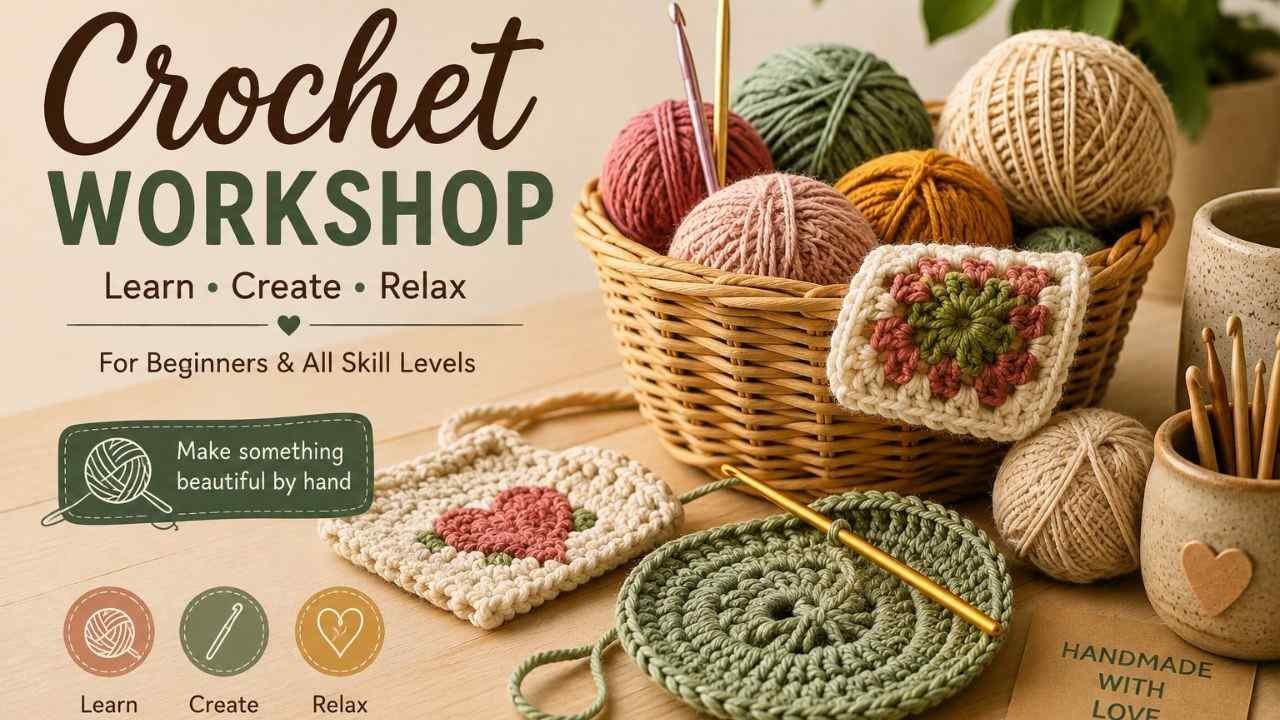
Read moreAre you looking for crochet courses in Ras Al Khaimah? Creative Hands Pottery Studio offers a studio space to beginners and those who are interested in…
Read more