
Beginner guide to pottery
Do you want the full beginner guide to pottery, which explains the process in detail, starting from getting clay to touch at first, to the creation of your completed ceramic piece?
As an instructor in the Creative hands pottery studio, I’ve had the opportunity to guide hundreds of students through their first experience. Some are excited, others anxious, but they always leave with clay in their hands and a smile on their face.
If you’re just beginning to learn about pottery, this guide for beginners was written using my own teaching experiences to guide you through the basics of what you can anticipate, what to do with your pottery, and to help you begin your journey of creativity with confidence.
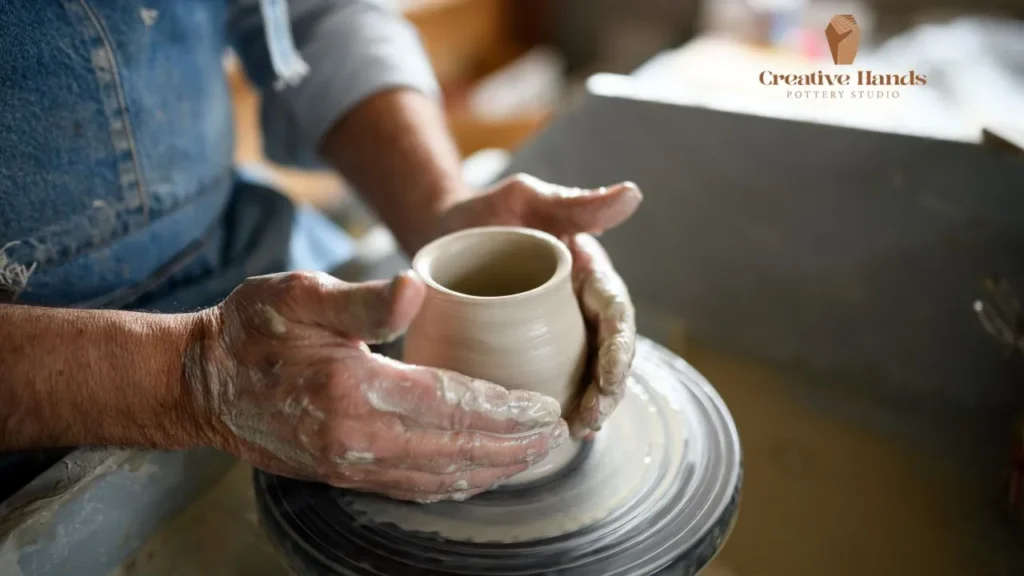
My First Lesson With Every Beginner At Creative Hands Pottery Studio
When a new student steps through the doors of Creative hands pottery studio for their first clay class, I generally sense a mix of excitement and anxiety. Some believe that they’re not “creative enough.” Others are worried they won’t be able to form clay correctly. This is precisely why my initial lesson starts with a single point.
Pottery is not about perfection; it is about connections.
- Connection to clay.
- Connection to your imagination.
- Connection with the creation process.
I’ve observed that novices are often too focused on the end result. They are looking for the perfect bowl and mug or the perfect piece of ceramic. For beginners, however, it’s not about getting it right the first day. It’s about understanding the way clay reacts to your tactile touch, as well as understanding the structure, and then allowing yourself to experiment without worrying about errors.
Here at Creative hands pottery studio, I would like to encourage all students to take a moment and experience the clay with their hands. Clay is flexible and at times, it can collapse. If that happens, it is not a failure, it’s a part of the process of learning. Every small error teaches control, balance as well as patience.
Many beginners believe that pottery is hard. But, in reality, pottery is just a craft that develops through patience and regular repetition. The longer you make pottery, the more comfortable you are. With time, you will learn from your hands the things your mind is exploring.
In our pottery beginner classes, we focus on establishing that connection first. Once students have mastered the wheel’s rhythm and the fundamentals of hand-building, their confidence naturally increases. Then the real creative process is born.
Understanding Clay - The Foundation Of Pottery
In every beginner class at our studio, I always begin by introducing the single most crucial element of ceramics—the clay itself. Before even touching the wheel or grabbing any equipment, I instruct students to comprehend and handle the clay. This is the foundation that makes all the difference in their ceramic journey.
How you work with clay determines the result of your efforts. This is why the very first lesson concentrates on developing the ability to control, be sensitive, and be aware.
Learning to Wedge Clay Properly
Wedging is the first ability every novice should be able to do. It requires kneading the clay to:
- Clean out air bubbles that have been trapped
- Establish a consistent and even tone
- Enhance the efficiency of your work
- Prevent cracks or explosions during firing
A proper wedging technique ensures that the clay is soft and well prepared for shaping. At the studio, I demonstrate different wedging techniques and guide students through each step until they’re comfortable.
Removing Air Bubbles
Air pockets are among the most common mistakes made by beginners. The smallest bubble could cause a clay fragment. I prepare students to spot uneven areas and to properly organize the clay before forming any shape. Pay attention to this aspect to help build sturdy ceramic foundations.
Controlling Moisture
Controlling moisture is an essential technique in pottery, especially for novices. The excess water weakened the pottery’s structure. Insufficient water causes the clay to harden. Students are taught
- How often should you add water?
- What can you do to ensure the correct uniformity
- The effects of drying on the piece that is finished
- Understanding moisture helps beginners create sturdy, durable pottery.
Beginner Pottery Techniques
Over the many years I’ve taught at the studio, I’ve observed that students feel more confident starting with easy, hands-on methods before progressing to more refined techniques. A solid foundation is crucial in the art of pottery, which is why I expose students to three essential methods that are easy for novices.
This method helps students learn about clay’s structure, balance, and shape — without the pressure to master the wheel right away.
1. Hand Building
Hand building is the way I teach almost every first pupil. This allows students to get directly to clay and learn what happens to it when it comes into contact with other materials. With no spin wheel, learners can focus on shapes, thickness, and structure.
Pinch Pots: The First Step into Pottery
Pinch pots are usually the first project a beginner makes. Children can gently squeeze and spin it with their fingers to form an incredibly small bowl.
This method of instruction will teach you:
- The wall thickness is even.
- Gentle pressure control
- It is important to be patient and have a rhythm.
- Fundamental shaping techniques
Coil Building - Learning Structure and Strength
Coil construction is the process of forming clay into long, rope-like strands before stacking them layer by layer to create height and shape.
By building coils, students learn:
- Structural stability
- Blending techniques
- Control of height
- Creative design flexibility
It allows novices to design vases, containers, and artistic shapes while learning how clay supports itself.
Wheel Throwing
It’s a unique moment during every beginning pottery course with Creative hands pottery studio. It’s the first time an individual has succeeded in putting clay into the wheel of pottery. This is a moment of amazement, delight and excitement simultaneously.
From first look, the spinning wheel may appear overwhelming. The speed and movement along with the soft clay reacting instantly upon contact could make novices feel uncomfortable. However, once they settle down and place their hands on the clay and begin to recognize its rhythm, things start to shift.
Glazing
Many beginners are unaware that pottery is a process that involves many stages. After shaping and bisque firing, glazing changes the design.
I teach students:
- What is the best way to distribute the glaze
- Understanding the glaze reaction
- Selecting the right textures and finishes
- Layering techniques for unique effects
The Step-by-Step Pottery Process I Follow
At the Creative hands pottery studio, I ensure that my students who are just beginning understand that clay is not only about making pottery; it’s a full artistic journey. Here’s the step by step process for pottery. I show my students how to do:
Clay preparation (Wedging)
Every class begins with wedging. Students learn how to properly work the clay to eliminate air bubbles to achieve a uniform quality. This is a solid base for all that comes after.
Shaping (Hand building or wheel throwing)
Once the clay has been shaped, learners move to creating their own designs. Beginning students start with hand building techniques or wheel throwing, based on their level of comfort. I closely guide them to ensure correct posture and balance.
The process of drying to the leather-hard stage
Following shaping, the workpiece needs to dry gradually. This is the ideal stage to refine edges and add specifics.
First firing (Bisque firing)
Next is the bisque firing inside the Kiln. The bisque firing process hardens the clay. It is my goal to explain how the timing affects the durability of the work.
Glazing
After bisque-firing, the students select the glaze color and finish. I teach them proper glazing techniques for smooth, uniform results.
Final Kiln Firing
This final firing transforms the glaze work into a completed ceramic creation. It is the most exhilarating moment -when you open the kiln and watch the final result.
Start Your Pottery Journey
We specialize in beginner pottery classes designed to make learning simple. Through structured instruction and handson learning, we ensure that every beginner develops practical skills. If you’ve been seeking a guide for beginning pottery or classes for newbies, the journey begins right here.
Visit Creative hands pottery studio and discover the pleasure of making art with clay, piece by piece.
FAQ
1. What can I expect to learn from the first class of pottery?
For your very first class, you’ll be taught:
- How to properly wedge clay
- Hand building basics, such as coil building or pinch pots
- A brief introduction to the potter’s wheel
- The clay’s response to humidity and pressure
2. Do you instruct wheel throwing for beginners?
Yes. At the studio in Ras Al Khaimah, I will introduce wheel throwing once students understand the basics of clay handling. I help beginners to learn:
- Centering of clay
- Opening the form
- The walls should be pulled evenly
- Making simple cups and bowls by shaking
Other services
Trustindex verifies that the original source of the review is Google. I took a pottery-on-the-wheel class at Creative Hand Studio, and it was a truly wonderful experience. I made two pots during the session, which were then placed in the oven for a week. After that, I returned for the painting session, and the pieces were glazed and fired again for another week. When I finally received my pots, they were completely ready and turned out beautiful. It was so rewarding to see the finished results after the entire process. The staff at the studio are very friendly, patient, and helpful throughout. I would highly recommend Creative Hand Studio to anyone interested in pottery or trying something creative and hands-on.Posted onTrustindex verifies that the original source of the review is Google. Had a very cute time creating little pottery pieces with my friend. Kind atmosphere, I loved how I was able to play around and explore but the instructor also provided loads of guidance.Posted onTrustindex verifies that the original source of the review is Google. Lovely place and great staffPosted onTrustindex verifies that the original source of the review is Google. Very good experience. Staffs are really accomodating and the ambience of the office is amazing. Excellent for skill development.Posted onTrustindex verifies that the original source of the review is Google. Had an amazing session. Very kind and cooperative team and good collections of potteries.Posted onTrustindex verifies that the original source of the review is Google. المكان روووعه وممتع والموظفين متعاونين، يستحق التجربة ♥️♥️Posted onTrustindex verifies that the original source of the review is Google. Love the staff, love the session and how they are deal with the beginner. Everything was amazing the vibes and the place.. 24/12/24 amazing experience. Must try it if you are in Ras Al khaimahPosted onTrustindex verifies that the original source of the review is Google. Great experience at Creative Hands pottery Studio. Parvathy’s gentle, clear teaching style and the warm environment made the pottery sessions truly enjoyable.