
What Are Different Techniques of Pottery Making?
A variety of methods called techniques are used to shape clay into pottery. These include hand building, wheel throwing, molding, and slip casting. Mastering and becoming…
Read moreIf you’re in search of a beginner pottery class in RAK, you’re likely interested in what you can expect when starting in pottery and whether it is for you. As a ceramics instructor at the Creative Hands Pottery Studio in Ras Al Khaimah, I see many students come into the studio asking the same questions and walk out with a sense of confidence, creativity, and a smile covered in clay. This blog will take you through what a basic pottery class at RAK is like from the perspective of an instructor.

Pottery goes beyond shaping clay. It is an opportunity to be creative and a craft that improves through repetition. Here in Ras Al Khaimah, we enjoy a peaceful environment that makes learning to make pottery more fun.
My students often join for the following reasons:
Are you looking to explore an exciting hobby?
It is not necessary to have prior experience. Beginner pottery classes are made specifically for beginners.
In every beginner class at RAK, I begin by introducing the primary component – the clay itself. Before students can play with the wheel or make their very first pot, they have to know the materials they’ll be using.
Students are introduced to the typical types of clay used in pottery:
Before making any part in our beginner pottery classes, the focus is on a single essential aspect – the process of preparing clay, also known as wedging. Like I tell my students, the best pottery begins even before the wheel starts to spin. When clay is properly prepared, the process becomes more fun.
Why Wedging Is Important
The process of wedging involves shaping clay into a ball and then compressing it to:
If air bubbles remain in the clay they could expand during firing. This is why this step is crucial, particularly for a beginner.
In every beginner pottery class in RAK, I teach students hand building methods before moving them onto the wheel. Hand-building forms the base of art in ceramics. It helps beginners understand the structure, balance, and design by using their fingers and simple tools.
The techniques enable students to take their time, feel the clay, and really understand how it reacts to pressure and contact.
The pinch pot is often a beginner’s first creation. With just their thumbs and fingers, students can gently squeeze and turn one small clay ball into a bowl-like shape.
Coil making is the process of forming clay into long, rope-like strands, then layering them to create a shape and a height.
Students acquire
Coiling can be a creative process that allows newcomers to explore natural shapes and other decorative objects.
In slab building, clay is cut into flat sheets, then formed into various shapes to create well-designed forms such as containers, trays, and plates.
This approach helps students to understand:
Wheel throwing is where learners really experience the lively relationship between their hands and the clay.
The primary ability I train is centring. This is the process of placing the clay in the perfect position at the center of the wheel as it spins.
Students are taught:
The process of centring requires patience and calm. When students master this skill, everything else will be simpler.
Following the centering process, we go into:
This section teaches control and consistency. Students are trained to maintain the same wall thickness and to use water properly. Too much pressure could cause the structure to collapse, and too little won’t form it properly. The art of finding the right balance is part of the learning process.
For first-timers, we concentrate on:
A first try may not be perfect; that’s normal. It is my goal to remind students that pottery is about perseverance and growth. Every single piece, even flawed ones, is a source of an important lesson.
Knowing the stages after shaping is as crucial as shaping the clay.
Students are taught about the various drying stages:
Each step determines whether cutting, trimming, or refining can be completed without risk.
After drying, the pieces are placed in the kiln for bisque firing. First firing:
The students are frequently amazed by how clay is transformed from a fragile material into a strong, durable ceramic at this stage.
Glazing can add both beauty and purpose. The following are the topics I teach students about:
Students learn how various glazes interact during firing and how the colors change inside the kiln.
Whether you’re trying clay for the first time or returning to an old hobby, the beginner class at RAK provides a welcoming and encouraging environment for you to begin your own creative process.
If you’re thinking of joining a beginner pottery class in RAK, it is the perfect opportunity to get started. I can say that every pupil begins in a state of uncertainty but departs with a sense of confidence.
Pottery shows you that errors can be part of the learning process. And sometimes the most gorgeous pieces arise out of unexpected forms.
Your clay journey begins by stepping into the studio. It will be worthwhile.
save the dates photo spots in Ras Al Khaimah, slabbing technique pottery workshop, how pottery benefits parents and kids, birthday party venues in Ras Al Khaimah, indoors activities in Ras Al Khaimah

Book a 1.5-hour pottery session in Ras Al Khaimah, all materials included.
A variety of methods called techniques are used to shape clay into pottery. These include hand building, wheel throwing, molding, and slip casting. Mastering and becoming…
Read moreAre you looking for the most enjoyable activities for kids within Ras Al Khaimah for your next family trip? Ras Al Khaimah has many options for…
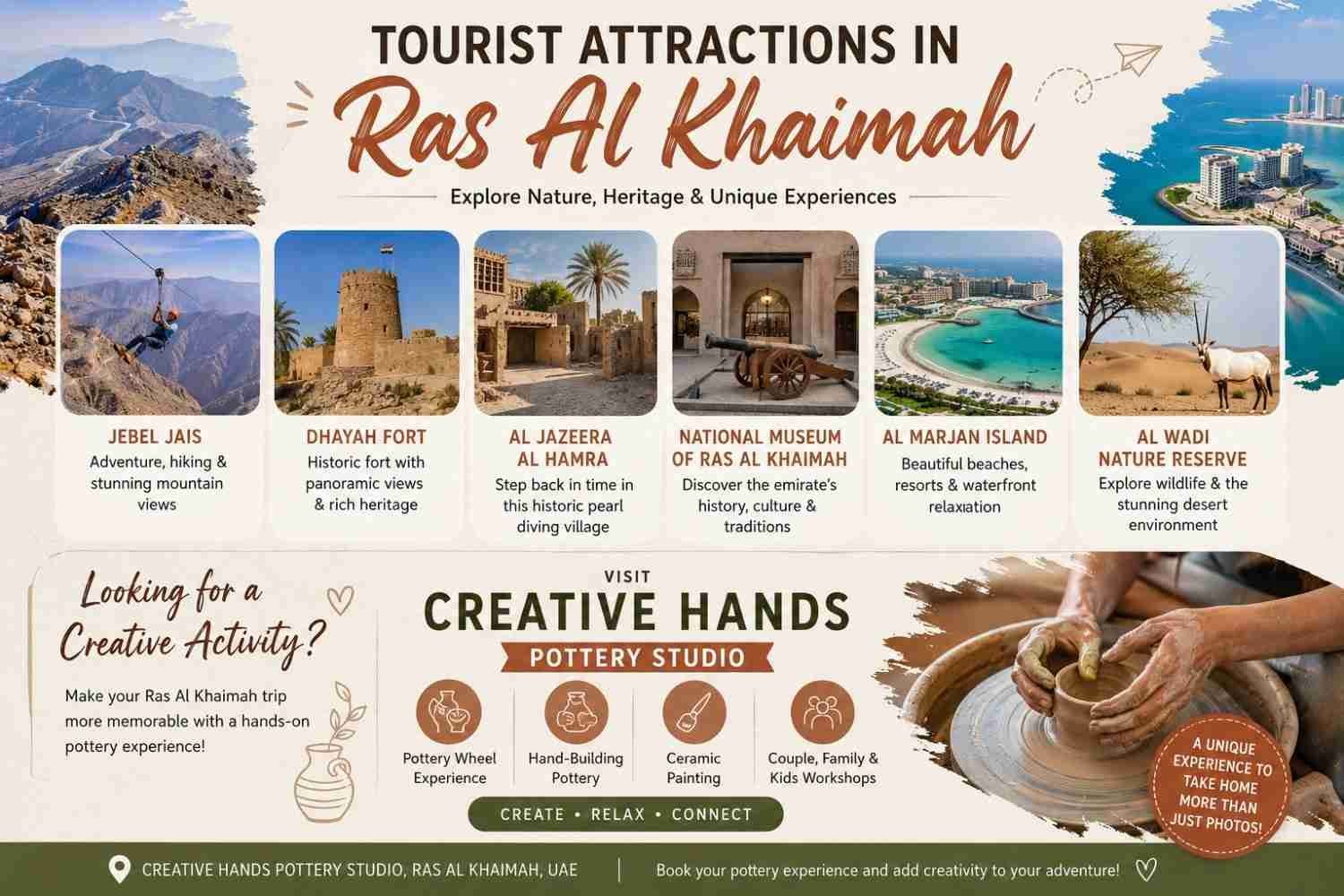
Read moreRas Al Khaimah is one of the most diverse destinations that offers a breathtaking mix of beaches, mountains, desert landscapes, traditional heritage sites and unique experiences.…
Read more