
Benefits of pottery for kids
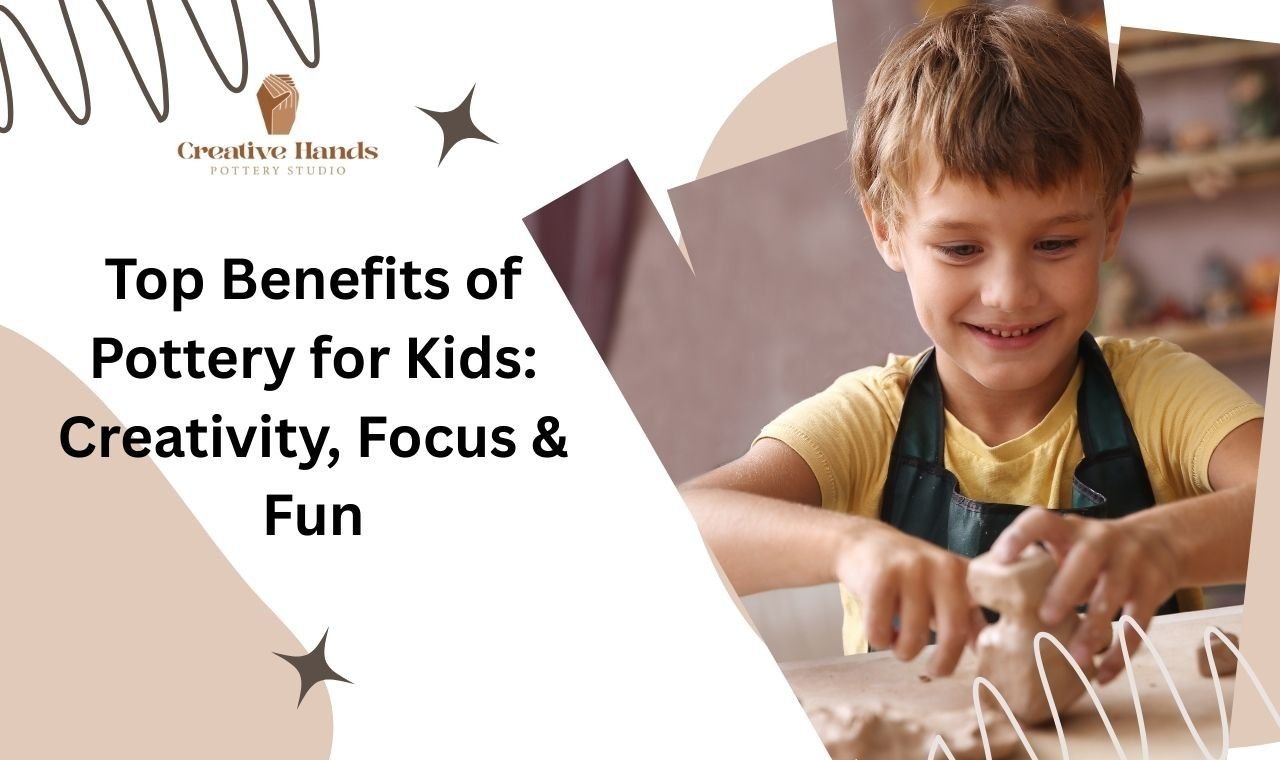
It is an effective method to help your child’s growth. Making clay on the wheel or shaping it with hands, pottery offers countless advantages for children by combining imagination, as well as focus and hands-on education in one enjoyable experience.
Why Pottery is Great for Kids
1. Boosts creativity and imagination
The clay is an unfinished piece of paper with unlimited possibilities. Children can transform it into whatever they want to create: animals or shapes, faces or imaginable creatures. The open-ended nature of the creative process encourages:
- Storytelling through sculpture
- Experimentation with no fear of making errors
- Unique personal expression
2. Enhances Fine Motor Skills
Clay manipulation strengthens hand muscles and increases coordination. The use of pottery supports:
- Hand-eye coordination
- Dexterity of wrists and fingers
- Grip strength is excellent for the control of pencils when writing
3. Supports Cognitive Development
Through pottery, kids can engage both the right and left sides of their brains. They are taught:
- Plan and sequence of steps
- Learn 3D spatial awareness
- Find creative solutions to problems.
4. Builds Confidence
It is awe-inspiring to hold an item that you made from scratch. Pottery can give children a powerful sensation of:
- Their pride in their work
- The confidence to experiment with new ideas
5. Promotes Social & Emotional Development
In group pottery classes, children learn to:
- Admire the work of others
- Work together on innovative projects.
6. Improves Focus and Patience
Pottery helps children take a step back and concentrate on the work that is in front of them. Making a pottery piece is a procedure that requires patience on every detail. The children will understand the importance of following a set of steps and not hurrying the process.
Educational Benefits Of Pottery
1. Reinforce Language and Communication Skills
Pottery encourages verbal communication, whether a child describes their project, asks for tools, or shares their process.
The following benefits are included:
- Improved listening and instruction-following
- Develop storytelling abilities
2. Mathematical Concepts
The world of pottery is a vibrant learning environment. Children can measure clay, estimate size, and explore patterns and symmetry.
Pottery is a great way to learn:
- Shape Recognition
- Volume (how to measure the clay)
- Pattern-making and sequencing
3. Encourages Perseverance and Concentration
Pottery is a great way to learn that good things do take time. It is a great way to help children learn patience, focus, and persistence.
Education outcomes
- Improved attention span in classroom settings
- Increased commitment to tasks and follow-through
In what ways does Creative Hands differ from other pottery classes for kids
We at Creative Hands believe that the art of pottery goes beyond an art class. It is a journey that fosters confidence and connections. Although many studios offer classes in pottery for youngsters, Creative Hands stands out with its distinctive method and a child centered approach.
1. Child Centered Learning
We don’t follow a universal method. Each class is customized to the child age and character.
- Preschoolers and Toddlers: Sensory play and basic exploration of clay
- Young children: Fun projects like animals and pinch pots
- Preteens: More advanced techniques such as coil construction and even glazing
2. Purposeful Creative Exploration - Not Just Projects
While many classes focus on replicating past designs, we encourage children to explore and develop their own concepts. The curriculum we use is designed to provide children with opportunities to explore stories fostering imaginative thinking.
3. Age-Appropriate, Skill Based Learning
In Creative Hands, we group children according to age and skill stage to ensure that every session is suitable for their development and is fun. The younger children are focused on playing with sensory and basic shapes, while the older children master advanced techniques such as hand-building, sculpture, and glazing.
Final Thought
In early education and beyond, pottery work helps in key developmental areas that assist children to flourish emotionally and physically. In studios, classrooms, or even at the table in the kitchen, pottery should have a permanent spot in the child’s education journey.
Other services
FAQ
1. What are the significant benefits of using pottery with children?
Pottery encourages children to develop their imagination, fine motor skills and emotional expression. It also enhances focus and problem solving skills.
2. At what age should kids begin to play with clay?
Children aged 3-4 can start with basic clay games. More structured techniques, such as wheel throwing, are appropriate for children ages six and over, based on the coordination of supervision.
3. What does pottery do to help my child's growth and learning?
Pottery requires planning steps, following them, and using hands, all of which improve coordination, concentration, and cognitive development, helping to support the development of children’s minds.
4. Does my child require previous experience to participate in the pottery class?
Not at all. Pottery classes are designed to meet any level of skill. Beginners are taught step by step how to improve their confidence and learn new methods at their own speed.