
What Are Different Techniques of Pottery Making?
A variety of methods called techniques are used to shape clay into pottery. These include hand building, wheel throwing, molding, and slip casting. Mastering and becoming…
Read moreSlow living is a way of life that encourages people to prioritise mindfulness over speed and action over efficiency. It encourages you to connect to what is truly important, whether that is relationships or even self-care.
Spending time at the pottery wheel offered more than a creative space; it offered real-life lessons in slow living.
The pottery craze slowly swept into my life, but quietly.
When I first touched clay, I realized:
There is no way to speed up the procedure.
If you press it hard enough to collapse, it will.
If you lose focus, it wobbles.
If you attempt to limit your efforts, your body resists.
Thus, I took my time and slowed down.
Shaping clay on the wheel turned into a contemplation. The constant spin, the soft pressure of my fingers, and the soft texture of the clay drew me into the present.
In this world where everything is instantaneous, pottery has taught me:
Still, shaping an ordinary bowl feels like therapy.
As a teen, I would fall asleep with my music playing around my bedside table. I was so enthralled by music that I was unable to bear the silence even while I fell asleep. However, somewhere in the process, I got overwhelmed by the bustle of Arabian life, and the relentless effort to “make it”, I eventually and consciously abandoned the pleasure of music. I quit singing (I am not a great singer, but still! Ha). I stopped lying on my sofa on Saturday afternoons while listening to music in the background. My life became much more focused on “making something of myself” than on living my life to the fullest.
My day was a blur of tasks.
Get up. Check my phone. Get up early for breakfast. Work. Scroll. Sleep. Repeat.
There was nothing wrong – but there was nothing that felt especially meaningful, either.
It felt like life was happening behind the scenes while I was rushing through a list on the front.
Slow living has challenged this routine.
The conversation prompted me to ask a very simple query: What if the little moments you spend in your life were the ones that mattered most?
It was there that intentional living first began for me, not in huge, life-altering events, but in choosing to stay aware in everyday situations.
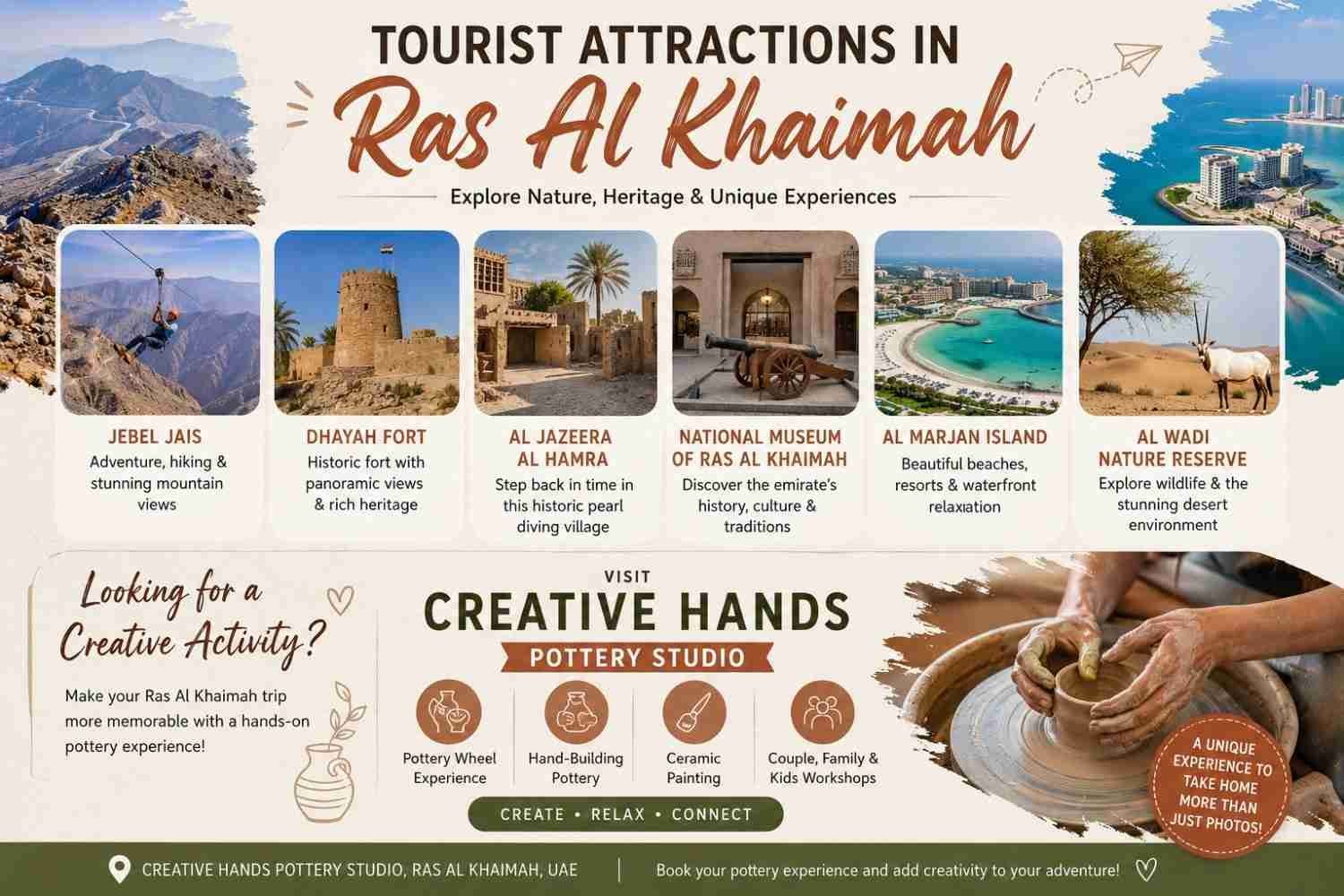
I walked into the Creative Hands Pottery Studio looking to test something completely new.
It surprised me how far that single decision would lead me into the world of slow living.
When I walked into the studio, it all felt different.
There was more than just the clay’s earthy scent or the hushed rhythm of wheels on the clay; it was the pace. The whole experience felt relaxed. Grounded. Intentional.
Nobody was hurrying. Nobody was multitasking.
Clay hands. Focused minds. Bodies present.
Working with clay is an incredibly humbling feeling.
You can’t dominate it. You can’t rush it. You can’t pretend your way past it.
I recall sitting behind the wheel, a bit anxious and slightly exuberant. My instructor guided me gently:
“Don’t try to force it. Feel it.”
My hands at first were uneasy. The clay was wriggling. The clay’s shape would not cooperate.
However, then something happened.
I stopped trying to influence the result and began taking note of the force of my hands and the subtle movements shaping the clay.
In that instant, the rest of the world faded away.
No alerts. No overthinking. No rush.
All I have is clay.
Pottery is a way to teach without saying a word.
Like patience.
If you rush, the item will fall.
When you lose focus, the shape distorts.
If you’re looking for perfection, you’ll be dissatisfied.
Each step, from shaping to firing, takes time.
The time doesn’t have to be something you need to “get through.” It’s part of the process.
I realized how much of my existence was spent striving to do everything faster. I also realized how insignificant that actually was.
Not a single thing I created on that day came out perfect.
Some were uneven. A few lean slightly toward one direction. A single one completely disintegrated midway through.
Yet, I loved them.
Since they were real.
In an age of perfection, the polished look of pottery reminds me that flaws don’t matter; they’re character.
Before my experience, I measured my productivity by output—how many things I completed, how quickly I moved through my work, and how efficiently I worked.
However, at Creative Hands Pottery Studio, productivity looked different.
It looked as if:
Then I walked away with something much more important – a feeling of peace I hadn’t felt in a while.
Pottery Forces You to Be Present
The first time I got behind the wheel, I saw that this isn’t something you can do while thinking about other things.
Clay demands attention.
The movements of your hands, as well as the pressure that you exert on the wheel — everything requires attention. If your mind is distracted from your focus, the form changes.
Then it clicked:
Pottery has a natural, peaceful character.
The repetitive movement of the wheel
The tactile experience of clay
The tranquil, clear surroundings
The whole thing works to relax your mind.
In the next few minutes, I stopped worrying about emails and my cell phone.
I was there, creating.
You may also find this helpful: Winter Class for Kids
Can You Rush Pottery?
But that’s not the issue.
If you are rushing:
The clay shatters
The shape becomes uneven.
Pottery taught me an easy but potent lesson:
Certain aspects cannot and shouldn’t be rushed.
From drying and shaping to firing, each stage requires time.
Is It Beginner-Friendly?
Yes. One thing that really stood out to me was how warm and relaxed the atmosphere was.
It is not necessary to have prior experience. There is no requirement for any experience to be “good” at art.
A peaceful space
Assistance without any pressure
The encouragement to be focused on the process and not on perfection
An environment of creativity that naturally reduces your speed
It’s not about just learning pottery. It’s also about observing peace.
I visited Creative Hands Pottery Studio to explore something different.
This slowdown is not a problem; it is simply a way to reconnect.
Sometimes all you need is an empty space, a wheel, and a piece of clay to help you get back in touch with yourself.
You may also find this helpful: how pottery benefits parents and kids
Slow living is living your life and focusing on what is happening now.
No, all levels are accepted. The program is intended to be fun and easy.
Since it demands full concentration and stimulates your senses, it promotes a slower, more focused pace.

Book a 1.5-hour pottery session in Ras Al Khaimah, all materials included.
A variety of methods called techniques are used to shape clay into pottery. These include hand building, wheel throwing, molding, and slip casting. Mastering and becoming…
Read moreAre you looking for the most enjoyable activities for kids within Ras Al Khaimah for your next family trip? Ras Al Khaimah has many options for…
Read moreRas Al Khaimah is one of the most diverse destinations that offers a breathtaking mix of beaches, mountains, desert landscapes, traditional heritage sites and unique experiences.…
Read more