
Essential Pottery Tools For Every Pottery Studio
As we began setting up our pottery studio, we realised that the creativity was not enough. It was impossible to make our ideas a reality without the proper tools.
Starting with a pottery wheel, to choosing the correct kiln for your needs, working tables and hand tools, each element of the studio affected our work. My experience is that having an organised, well-equipped pottery studio doesn’t just increase productivity but also improves security and the overall craft.
In this post, we’ll discuss the most important tools that every pottery studio requires. Based on our own experience, regardless of whether you’re creating your own pottery studio at home or planning an enterprise-level ceramic work space. If you’re eager to design an inspiring, well functioning studio, the following checklist can help you get started with confidence.
Useful link : best tools for handbuilding pottery
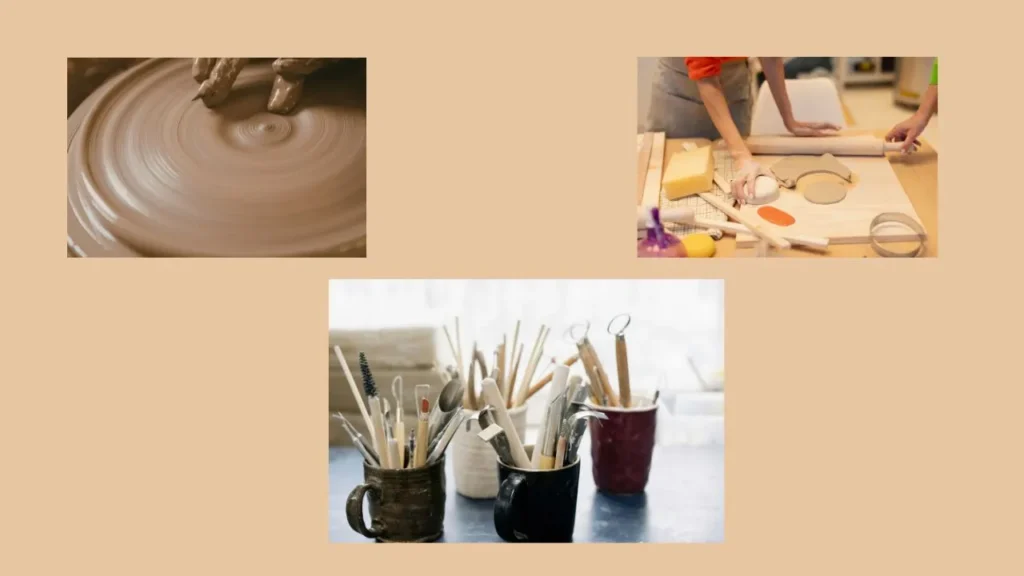
Pottery Wheel
When we began building our pottery studio, our first significant purchase was a pottery wheel. We can recall staring at it on the day it was delivered and recognising that the wheel would soon become our primary means of artistic expression. Nothing else has shaped our workflow, productivity, and even my growth quite like my work wheel.
Why You Truly Need A Pottery Wheel
In our own experience, we can tell you what makes the pottery wheel indispensable for my studio:
Throwing functional pieces: Every ceramic item we design starts on the wheel. It lets me create elegant forms that are difficult to accomplish by hand.
More Speedy Production: After we got comfortable with centering the clay, my production speed nearly doubled. That which used to take me several hours to build by hand could now be done in just a few minutes.
Precision and symmetry: The wheel provides unparalleled control. If I need to match a set of dinnerware or a uniform size, the wheel guarantees accuracy every single time.
Types of Pottery Wheels
The process of choosing the best wheel was difficult initially. This is what we found by doing some research and hands-on experience:
- Electric Wheels – Our Personal Choice
The electric wheels are quiet, smooth, and durable. We picked one for this because we needed constant speed control and less physical tension. The majority of studios today, particularly home-based setups, electronic wheels are the best option.
- Kick Wheels – Traditional and Grounded
We tried with a kick-wheel in a class, and it was an entirely new experience. It is a manual device that requires greater physical exertion; however, it builds a strong relationship between clay and the body.
- Tabletop Wheels – Great for Small Spaces
We are considering getting a tabletop in case space is an issue. They are lightweight and cost effective, making them perfect for those just starting or working in apartment buildings. But they might not have enough power for bigger projects.
Buying Tips
Make sure you have at least a 1/2 HP motor: Anything less than that will be a struggle when throwing bigger pieces.
You may also like to read, affordable pottery making classes in the uae
Kiln
We believed that creating a stunning piece on the wheel was the toughest aspect. It was then that we realised the transformation actually happens inside the kiln. Kilns transform clay’s soft, fragile texture into strong clay by firing it at high temperatures. Without it, each cup, bowl or vase that we designed could be fragile and flimsy.
The decision to invest in the correct pottery kiln was among the biggest decisions we made in our studio. The kiln completely transformed my workflow, quality control, and creative potential.
Why A Kiln Is Essential In Any Pottery Studio
In my personal experience, the kiln can do much more than “bake” clay:
Hardens Clay (Bisque firing): The first firing takes moisture out and bonds chemically the clay particles and transforms it into a durable ceramic shape. The process alone has helped make our work safer and much easier to glaze.
Matured glaze finishes: Second firing melted the glaze, creating texture and a non porous finish.
Guarantees durability and functionality: Proper firing makes pottery food-safe and durable enough for daily use.
Types of Kilns
In research for pottery kilns to use in our pottery studio, I explored three types of pottery:
Electric Kilns
Electric kilns are among the most used in ceramic studios. By programming the settings, I can control firing plans precisely without having to track temperature changes.
They’re particularly suitable for novices or home-based pottery studios.
Gas Kilns – For Unique Glaze Effects
I’ve had the pleasure of working with gas kilns at studios, and they create beautiful atmospheric effects that electric kilns cannot always reproduce. They create unique glaze patterns; however, they require more knowledge and planning for ventilation.
Useful link : how pottery benefits parents and kids
Clay
When we started working at our pottery studio, we were unaware of how the kind of clay used affected my outcomes. We soon realised that choosing the correct clay is one of the most crucial options a clay artist can make.
The clay you pick directly influences the texture and its final appearance. The clay determines how it feels in your hands.
Why Choosing The Right Clay Matters
My personal experience suggests that clay has an impact on:
- Flexibility: Some clays are gentle and easy to handle, whereas others require greater ability and skill.
- Fire Temperature: Each clay type develops at a specific kiln temperature.
- Durability: The strength of your final ceramic will depend in large part on the clay structure.
Common Clay Types Used In Pottery Studios
- Earthenware (Beginner-Friendly)
Earthenware was the first clay we have ever worked with. It burns slowly which makes it perfect for beginners. We were able to form easily when using the wheel.
The reason I suggest it is for those who are new to Pottery:
- A wide range of vibrant glaze shades
- It is soft and simple to manipulate
- Stoneware – Durable and Versatile
As our abilities grew, we switched to stoneware, which quickly became our favourite in the studio. Stoneware is fired at higher temperatures resulting in durable ceramics.
Why are we working with, stoneware
- Very durable following firing
- Great for daily usage
- Natural and beautiful earthy finish
- Porcelain – Smooth, Refined, and Advanced
It’s extremely elegant and smooth, however it takes patience and precision. If properly centered it’s smooth and silky on the wheel.
What I’ve learned concerning porcelain
- Produces elegant, translucent results
- Perfect for fine art ceramics
- It requires careful drying and firing
Explore more about how to do wheel throwing
Hand tools
When we started building our pottery studio, we were tempted to put most of our funds into expensive tools like the wheel or the kiln. However, it didn’t take long to see that my simple hand tools were what I reached for every day. Actually, having a comprehensive toolkit for pottery quickly became as important as the main tools in my studio.
Wire Clay Cutter
The tool is used to break large clay blocks and remove the pieces from the wheel. Strong, durable wire cutters ensure smooth, uniform cutting.
It’s essential for:
- The process of removing large blocks of clay
- The removal of finished components from the wheel
- Parts of the dividing process are evenly distributed
Sponges
Control the moisture on your surfaces, make them smooth, and remove any excess slip. Achieving the right balance of water will improve the clay’s strength.
Metal & Rubber Ribs
Ribs are a way to compress clay and smooth its walls. Metal ribs create sleek, straight lines, and rubber ribs smooth curves and surfaces.
Ribbon Tools
The Ribbon Tools have completely transformed the way I cut and hollow out clay. The flexible metal loops allow smooth material removal without damaging the surface.
I frequently use ribbon tools to:
- Sculpting
- Cutting thick bases
- Carving decorative textures
They are particularly useful when improving the leather of hard pieces.
Needle Tool
A needle was among the tools I first learned to utilize properly. It might appear basic, yet it’s incredibly flexible.
- Trim excess clay from the rim
- Cut small details
- Score clay for attaching handles
- Examine the thickness of a throw piece
Final thoughts
The process of setting up a pottery studio involves more than just the area — it’s about creating an atmosphere that encourages creativity, talent, and art to flourish.
The pottery wheel acts as the pulse of the studio. It shapes clay into stunning shapes. The kiln transforms clay into hard ceramics. We at Creative hands pottery studio have witnessed how quality equipment can boost confidence. Creating your studio with the right equipment is the initial step towards making your vision a real work of art.
