
Glaze Firing
Glaze Firing for Ceramic & Pottery Pieces
Get the final touch on your glazed pottery at Creative Hands Pottery Studio with professional glaze firing. Glaze firing not only gives pottery its final color and texture but also makes the glaze a permanent and protective coating.
Have your home made pottery or ceramic items or any item that has been bisque fired and is ready for glazing. But for an item to be considered complete and usable, it must go through glaze firing.
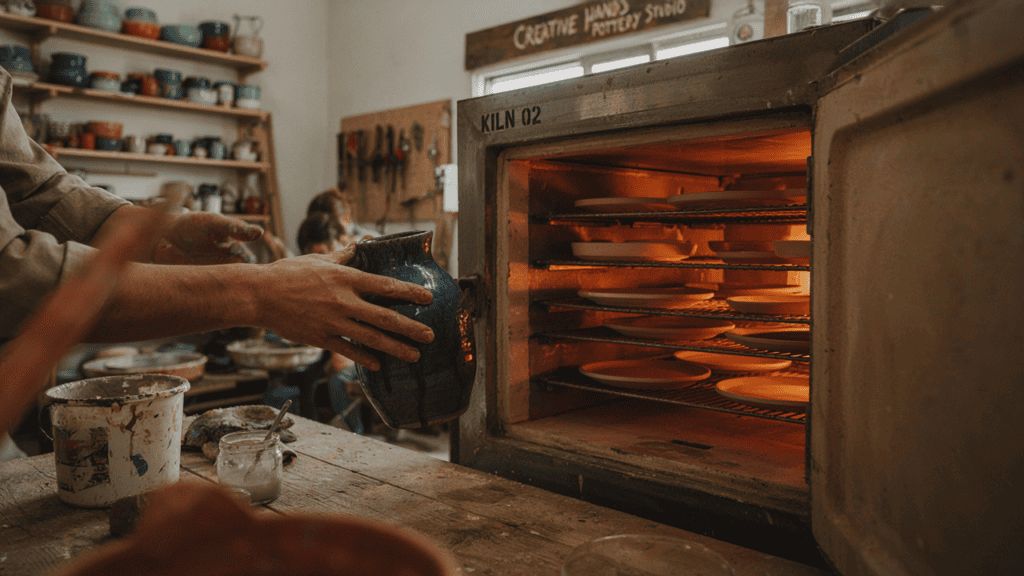
What Is Glaze Firing?
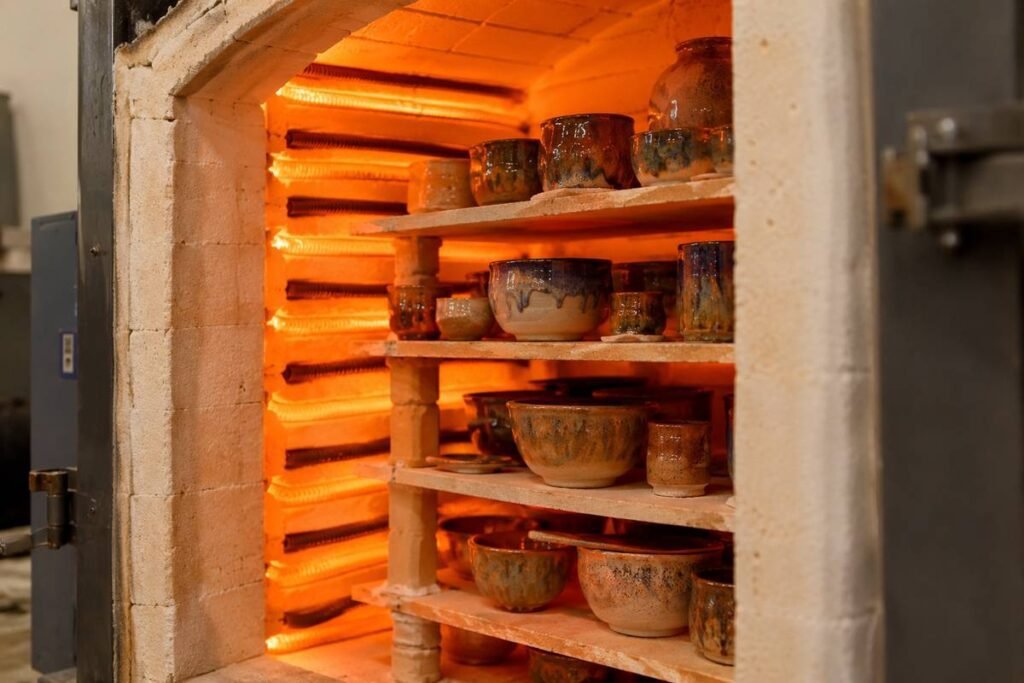
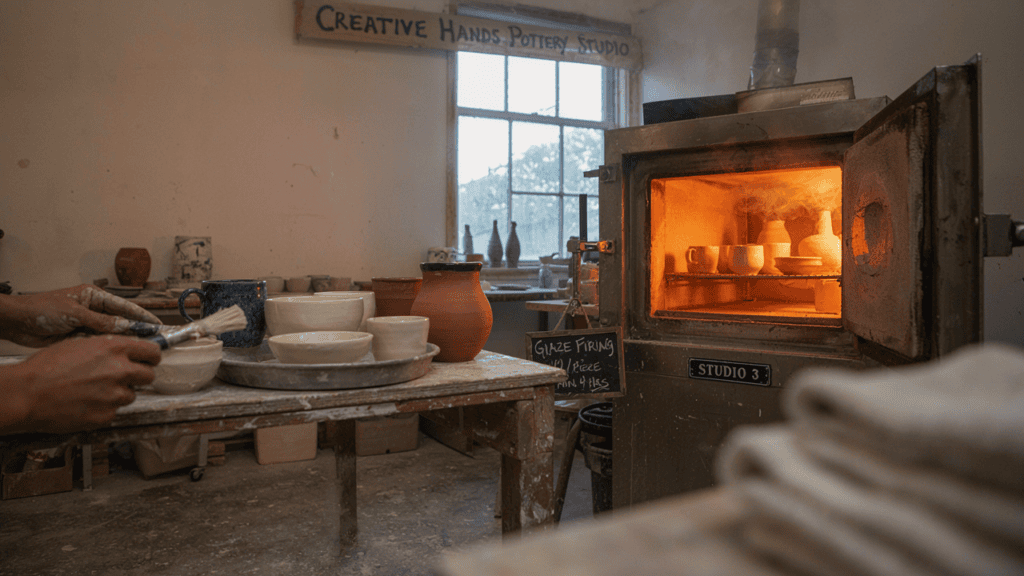
Glaze firing is the process of melting a glaze over a ceramic piece in a kiln. The ceramic piece is fired at a high temperature. During firing, the glaze is permanently fused to the piece of pottery.
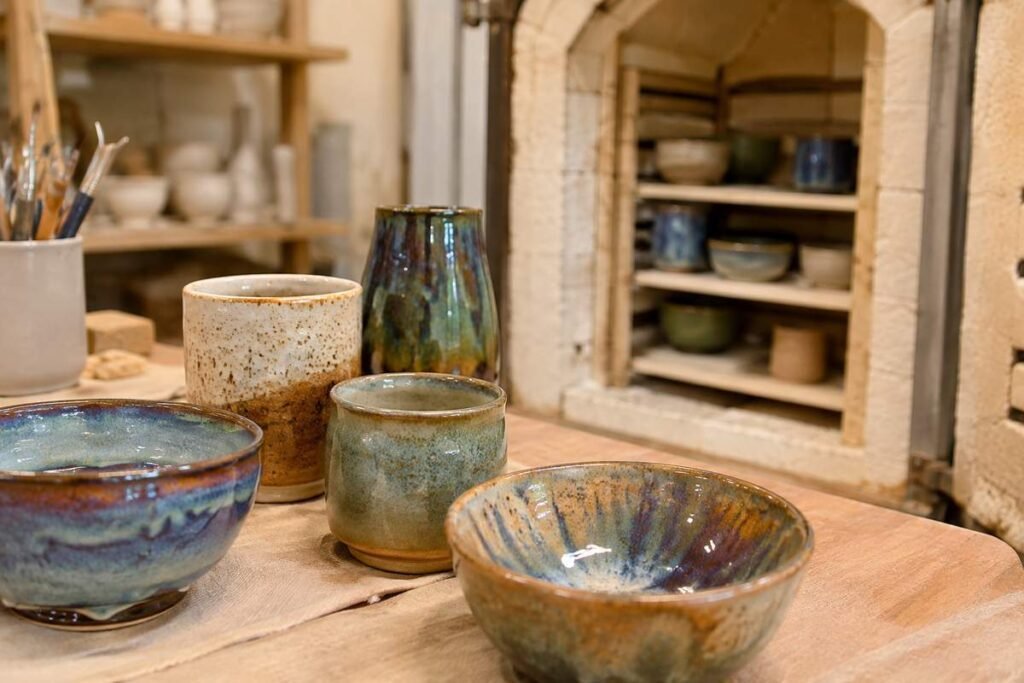
The result of the firing process can vary. The color and surface of the glaze are often quite different from the original glaze. This gives pottery a unique quality and a bit of individuality.
Our Glaze Firing Service
Our service is suitable for ceramic items properly prepared for glaze firing and ready for the glaze firing stage. We offer glaze firing for:
- bisque-fired pottery
- ceramic mugs, bowls, plates, vases, and other pottery
- hand-built and wheel-thrown ceramic items
- glazed decor and ceramic tableware
- individual and small-batch ceramic items
- items needing special attention during the firing process
The firing temperature may be up to 1220 C in our studio, depending on the clay, glaze, and other factors of the item.
The appropriate temperature for firing is established by the compatibility and manufacturer’s recommendations for the clay and glaze. The different glaze systems matured at different temperatures, which means that not all clays can be fired at one temperature.
How Does Glaze Firing Work?
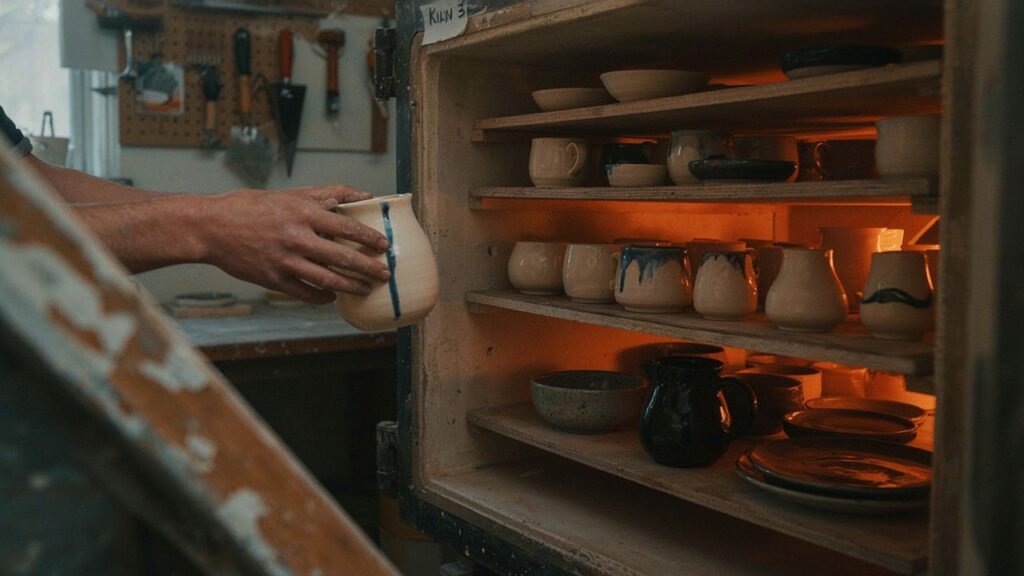
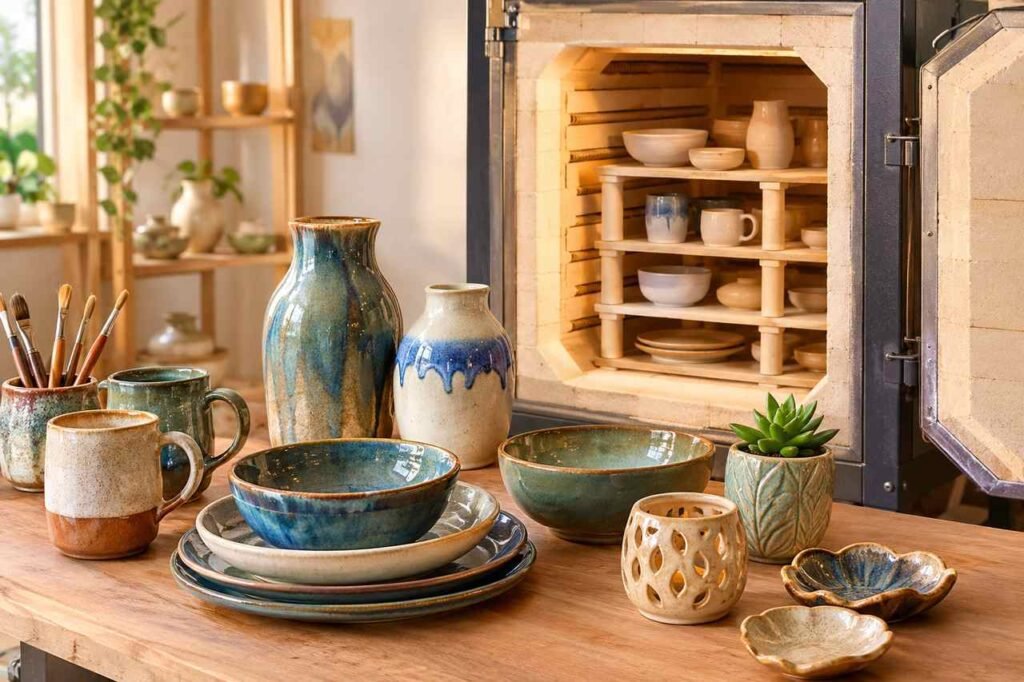
Glaze firing takes place when the potter puts glazed pottery in the kiln so that the glaze can melt and fuse with the ceramic surface. The temperature depends on the type of clay and glaze used.
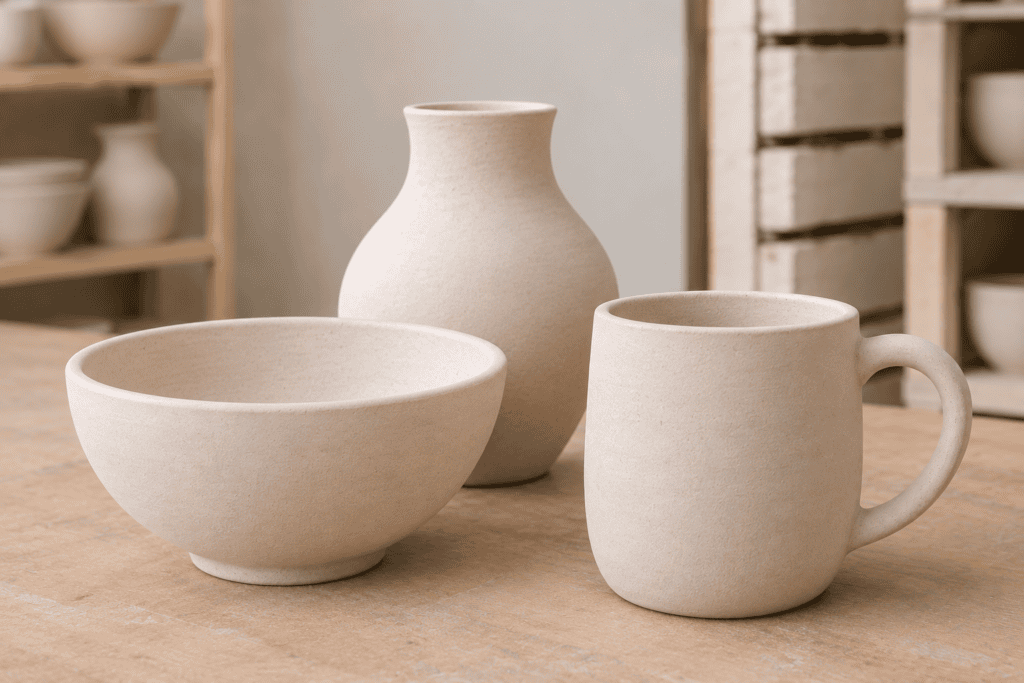
Bisque-Fired Piece
The ceramic piece should have been bisque-fired. This step ensures that the ceramic is firm enough to handle and is porous enough to absorb and retain glaze.
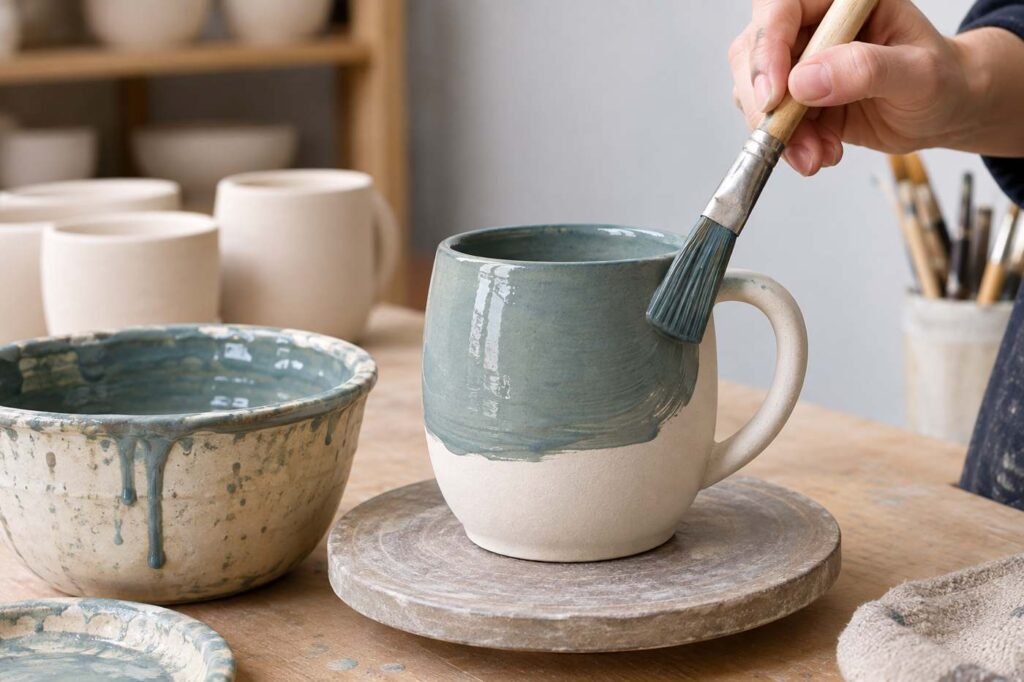
Glaze Application
The ceramic is coated with glaze using brushing, dipping, pouring, or spraying. The piece should be properly prepared to allow the glaze to be applied correctly. Any unwanted glaze should be removed from the bottom of the ceramic piece.
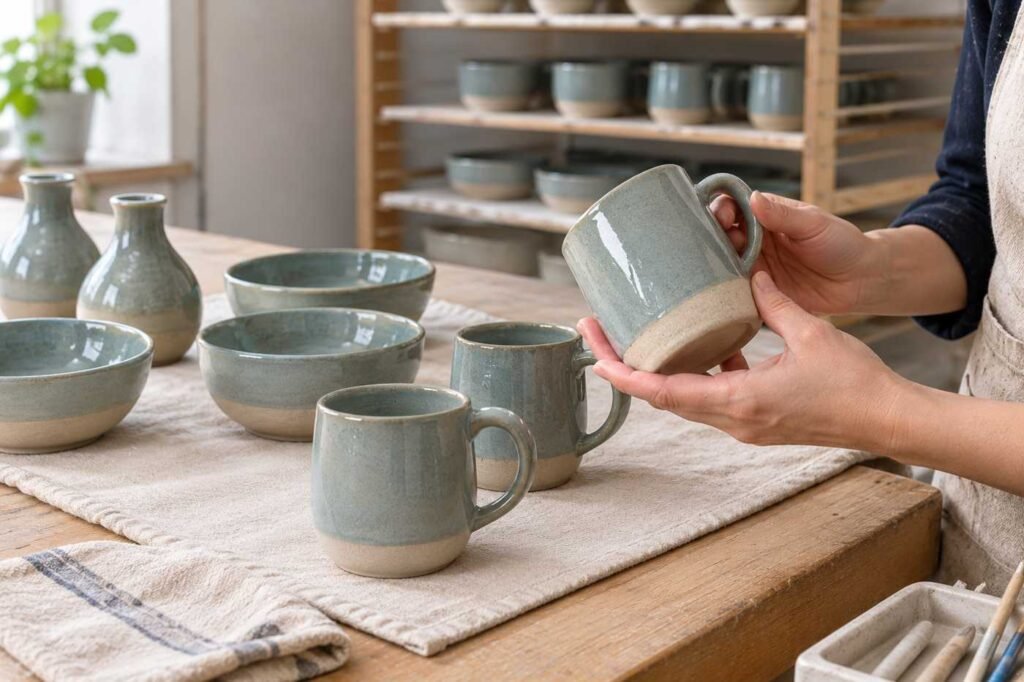
Drying and Inspection
The ceramic with applied glaze should be thoroughly dried. Surface and bottom inspection should be conducted to ensure that there are no defects that could lead to glaze defects when the ceramic is fired.
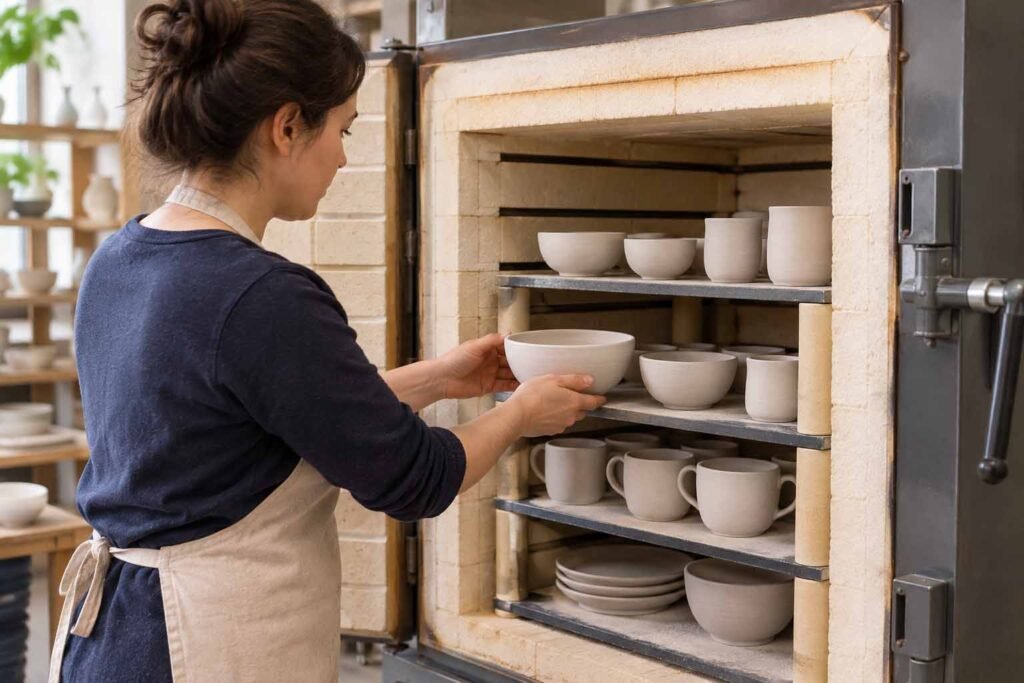
Kiln Loading
Ceramic pieces are loaded into a kiln with adequate spacing between the pieces. The glaze should be kept off other surfaces, including the bottom of the kiln, as it will stick to them when hot.
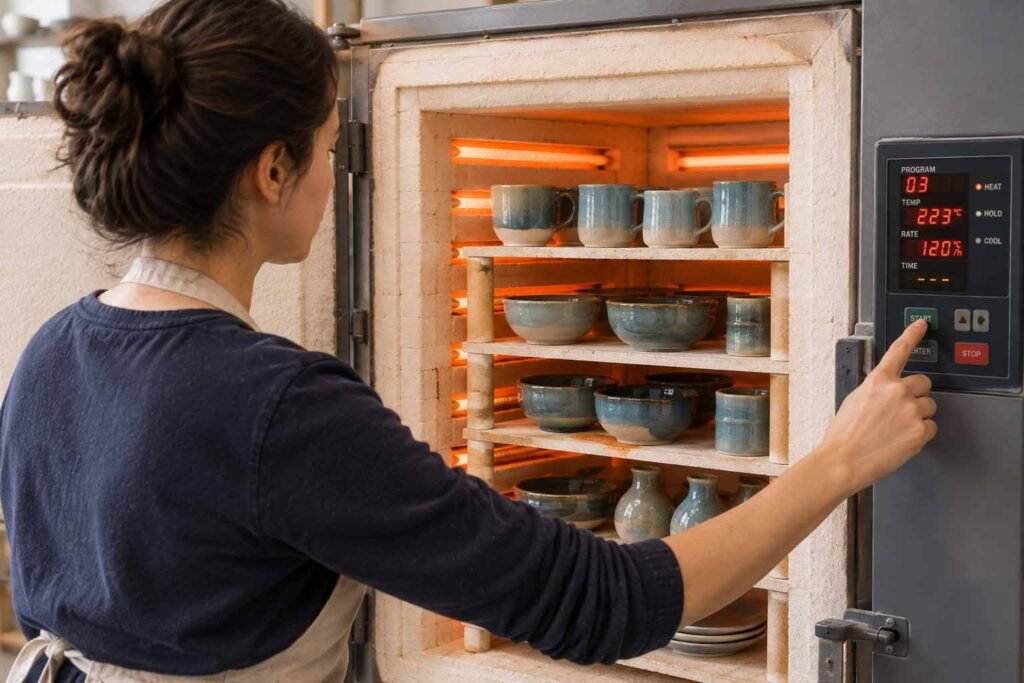
Glaze Firing
The loaded kiln is then fired at high temperatures. As the glaze is heated, it starts to melt to form a glassy substance that coats the ceramic surface.
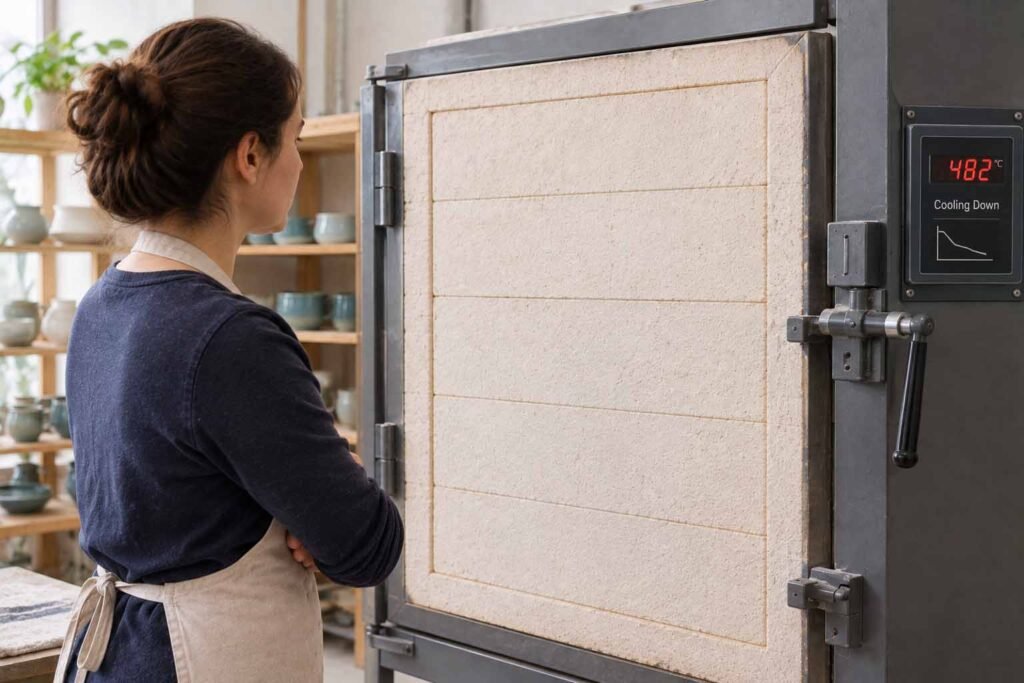
Controlled Cooling
Once the ceramic reaches the desired temperature, the kiln is cooled slowly. The kiln should not be opened when the pottery is still too hot, as this would result in cracks due to uneven cooling rates.
What temperature is used for glaze firing?
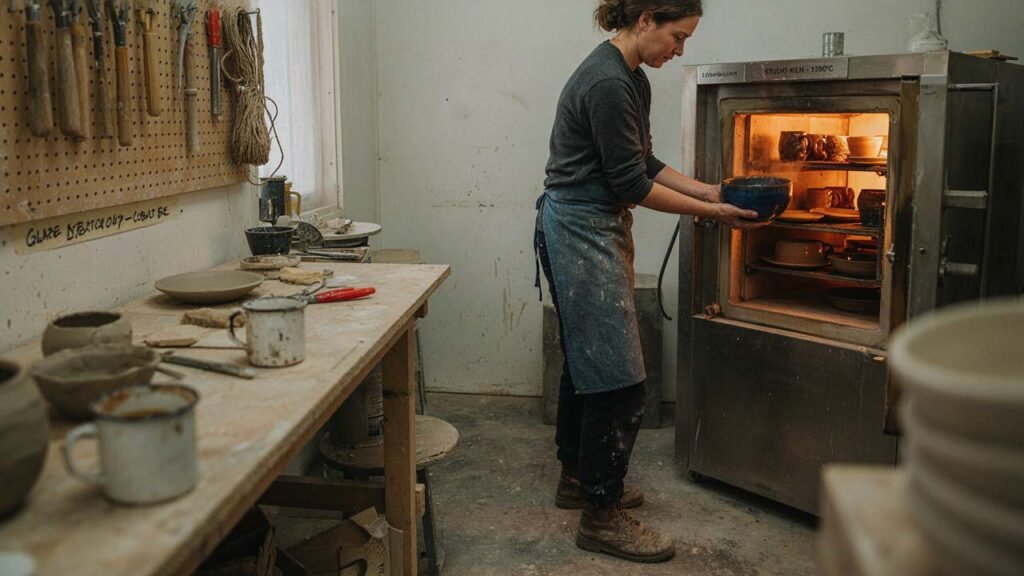
Glaze firing temperatures are clay and glaze dependent. Different combinations allow the use of low, medium or high firing temperatures. Creative Hands pottery studio kilns can fire up to about 1220 degrees celsius. However, this information does not allow us to randomly fire a maximum temperature kiln with different kinds of clay and glazes. Different ceramic items, and thus different kinds of clay and glazes, require different schedules and temperatures. For this reason, a firing schedule is developed for each kind of ceramic item.
How should pottery be prepared for glaze firing?
Before glaze firing, make sure that.
- The pottery is completely dry.
- The glaze is appropriate for the clay used.
- The pottery is evenly glazed.
- There is no glaze on the bottom.
- Loose bits of glaze have been removed
- No special instructions have been noted.
This will hopefully prevent glaze runs, uneven glazing, crawling, pinholes, and damage to the shelves of the kiln.
Is Glaze Firing Suitable For Functional Pottery?
Pottery can be glaze fired to make mugs, bowls and plates. Whether something can be used to serve food or drink depends upon a number of factors, including the properties of the clay body and glaze, the maturity of the firing, and the use and purpose for which the pottery was made.
A piece is not necessarily food safe just because it has been glaze-fired.
Can You Glaze Fire Pottery Made With Any Glaze?
No. The glazes need to be fired at the same temperatures as the clay body.
If you do not know whether a glaze will work, include the information about the glaze or provide the instructions given by the manufacturer and I can tell you if it will work or not.
Important Firing Information
Using a kiln can cause pottery to break, warp, crack or suffer glaze irregularities. Many other factors can cause irregularities including the moisture content of the clay body, how the clay and glaze bodys interact, the purpose for which the pottery was made, the sequence in which the pottery was loaded into the kiln, and the experience of the person who loaded the kiln.
Creative Hands endeavors to load the kiln with pottery in a way to minimize the risk of irregularities; however, it is not always possible to avoid this.
Book a Glaze Firing Service
Have bisque-fired pottery that is ready for its final glaze firing? Contact Creative Hands Pottery Studio to discuss your ceramic pieces, clay and glaze specifications, firing requirements, and service availability.
Complete your ceramic project with professional glaze firing at Creative Hands Pottery Studio.
Frequently Asked Questions
What is glaze firing?
Glaze firing is the process of firing ceramics at extremely high temperatures in order to fuse and fully bond the glaze to the ceramic piece.
What temperature do you use for glaze firing?
The kiln at Creative Hands Pottery Studio can go up to around 1220°C. The temperature depends on the ceramic clay and glaze manufacturer.
Can pottery made by hand building and pottery made by wheel be glazed?
Yes. Hand building pottery and pottery on the wheel can be glaze fired after bisque firing. The pottery can be prepared for glaze firing according their respective clay and glaze requirement.
Can I bring my own glazed pottery for firing?
The items will be considered if they are appropriately prepared and made of clay and glaze that can be fired in the available kilns. It is advisable to provide information about the material and glaze before firing.
Why does my glaze colour change after firing?
The glaze colour changes during firing. Depending on the type of glaze materials used, it can become darker or lighter.
Is glaze firing available?
Yes, glaze firing is available as part of our pottery offerings at Creative hands pottery studio in Ras Al Khaimah.