
Bisque Firing
Professional Bisque Firing for Your Pottery
Bisque firing can be described as the first stage of kiln firing that involves hardening the dried clay. It prepares the pottery for glazing or painting. Creative Hands Pottery Studio in Ras Al Khaimah offers bisque firing for suitable pieces of clay that are ready to be glazed or painted before their final finishing.
We offer our bisque firing service to the community. You are welcome to bring in any clay piece you have made, whether it be a planter, sculpture, mug, bowl, or anything else.
Bisque firing is an important step in the finishing process of clay and ceramic pieces. After bisque firing, you can add decorations and colors to your piece.
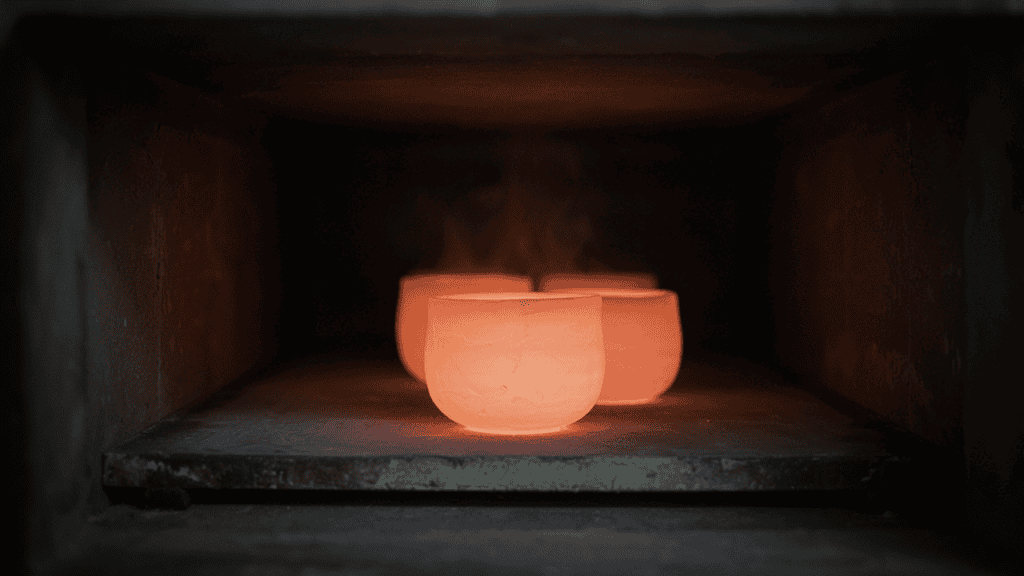
What Is Bisque Firing?
Bisque firing can be described as the first stage of kiln firing that involves hardening the dried clay. It prepares the pottery for glazing or painting. Creative Hands Pottery Studio in Ras Al Khaimah offers bisque firing for suitable pieces of clay that are ready to be glazed or painted before their final finishing.
In simple terms:
Raw clay → Completely dried pottery → Bisque firing → Bisque ware → Glazing → Glaze firing
Bisque fired pottery is not yet the final ceramic product. It is prepared for glazing, underglazing, painting, or other suitable ceramic surface treatments.
How Does Bisque Firing Work?
The bisque firing process requires controlled heating and cooling. Pottery must be completely dry before it enters the kiln because remaining moisture can create pressure inside the clay and cause cracking or breakage.
The general process includes:

Pottery inspection
The pottery is checked for visible cracks, trapped moisture, unsuitable attachments, and other issues that could affect kiln firing.

Complete drying
The clay piece must be completely dry before firing. Even pottery that feels dry on the outside may contain moisture inside.
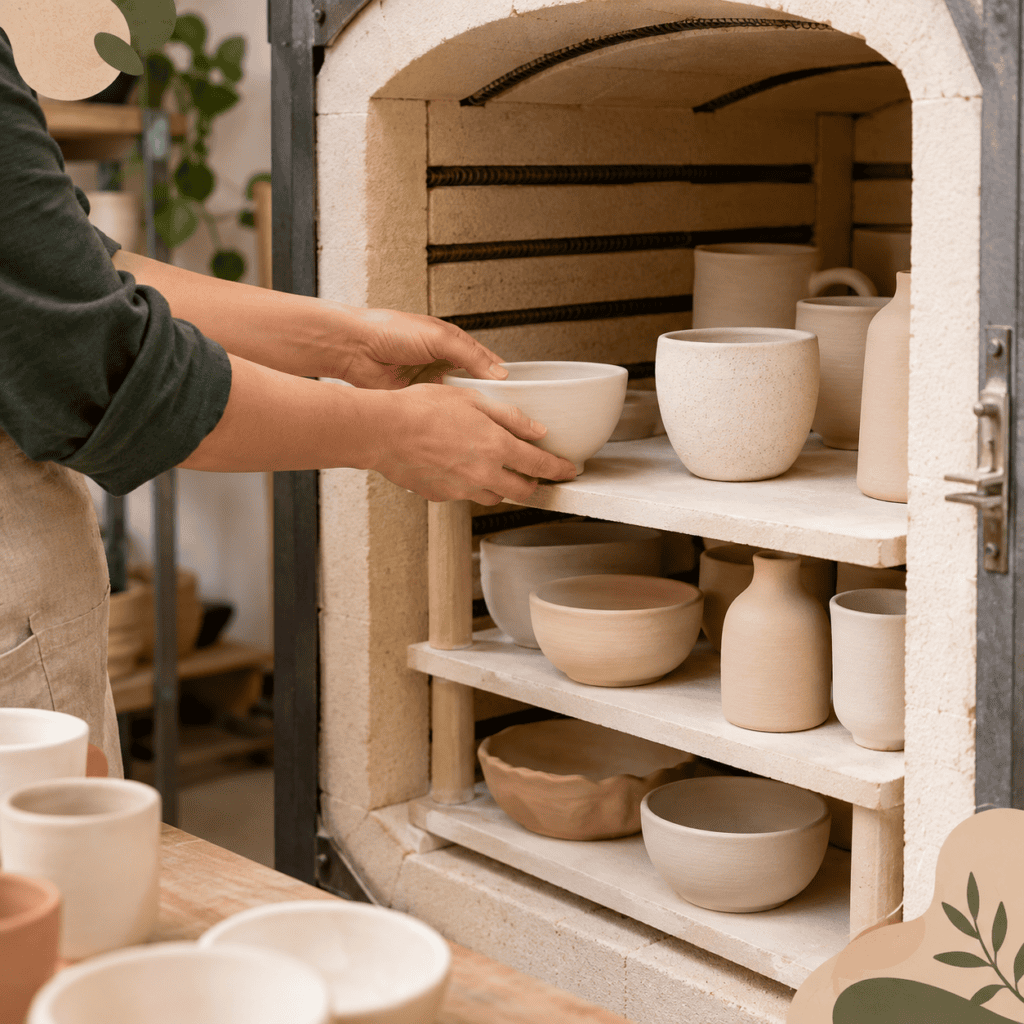
Kiln Preparation
Suitable pottery pieces are carefully arranged in the kiln with appropriate spacing to allow heat to circulate.
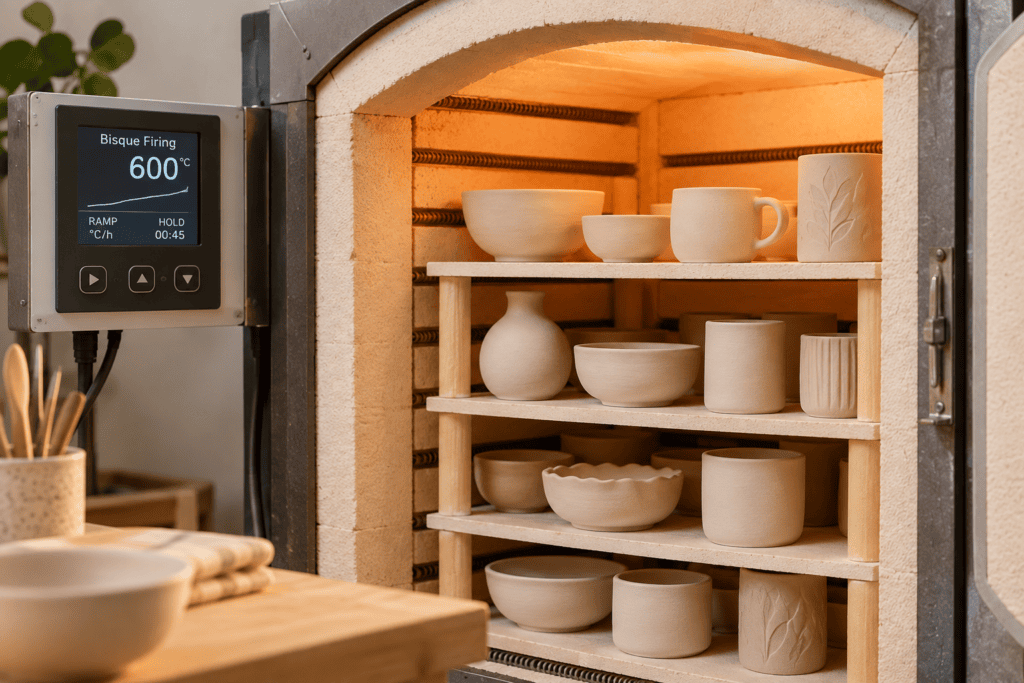
Controlled bisque firing
The kiln gradually reaches the required bisque-firing temperature according to the clay body’s firing specifications.
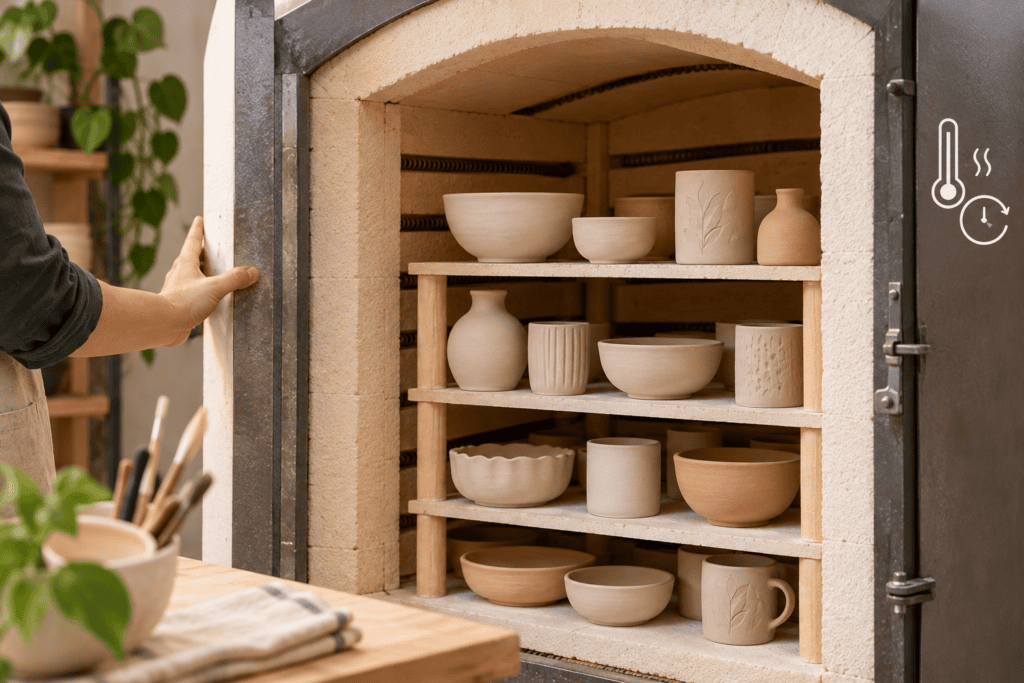
Controlled cooling
After firing, the kiln is allowed to cool before the pottery is removed. Opening a hot kiln too quickly can increase the risk of thermal shock and damage.

Final inspection
The fired pieces are checked before being returned for glazing or further ceramic work.
What Is The Temperature For Bisque Firing?
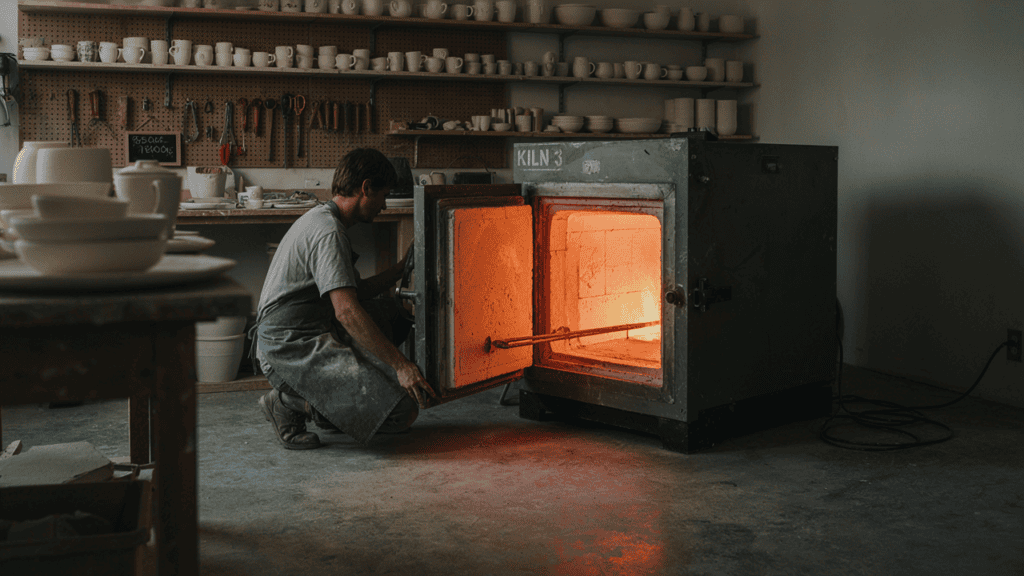
The temperature for bisque firing at the Creative Hands Pottery Studio is around 1220°C. This is dependent on the clay body and the schedule for which it needs to be fired.
In order for the clay to become bisque ware, which is strong and porous, the water in the clay needs to be completely removed and the clay body transformed.
Not all clays have the same transformation temperature. It is the responsibility of the user to check the temperature range recommended by the clay manufacturer. The staff at Creative Hands Pottery Studio will check the body of the clay and determine if it is suitable to be fired at 1220°C.
Bisque Firing Basics
Before we proceed with the explanation, we would like to dispel some common terminology related to bisque firing:
Bisque or Biscuit Firing
This phrase refers to the initial process of firing a ceramic ware at a certain temperature to make it suitable for decorating.
Candling
This term refers to the process of slowly and gently heating the kiln and its contents to a temperature slightly higher than the ambient one but below the boiling point of water.
Single Firing
This phrase refers to the process of single-firing ceramic ware to obtain a finished product.
Sintering
The general term for the process of solid-state bonding of a ceramic body through the application of heat until the particles melt and fuse together to a considerable degree without losing volume.
Twice Firing
This phrase refers to the process of either initially firing the ceramic ware and then applying and firing glazes to obtain a finished or an intermediate product.
Why do you need to bisque fire?
Bisque firing is one of the most essential processes to make the ceramic ware stronger and prepare it for glaze firing.
It is the initial stage when the raw material changes its structure into a more dependable and porous form suitable for subsequent working with it.
Strengthening the Clay Body
The first important change that takes place during the process of bisque firing is strengthening the clay.
Due to the controlled heating in the bisque firing process, the clay becomes harder and more durable.
This helps the clay body to resist any manipulations when further working with it.
Such manipulations include applying any decorative elements, underglaze, and glazes.
Creating a Porous Surface
The second important change that takes place during the process of bisque firing is creating a porous surface.
This change is useful for the glazing process, because it ensures that the clay body will be able to withstand the glaze application and additional high temperatures.
The porosity of the surface also ensures that the glaze and underglaze adhere to the surface of the item properly.
It ensures that after the final glaze firing, the fired piece will have a perfect surface.
Eliminating Moisture and Impurities
Bisque firing also eliminates moisture and impurities from the clay body.
The controlled process of bisque firing ensures that all moisture trapped in the clay will be gradually removed, thus eliminating the risk of distortion, cracking, or explosion.
The process of bisque firing burns out the organic materials and impurities in the clay, leaving the clay body prepared for glaze application.
Facilitating Safe Glaze Application
The process of bisque firing prepares the clay body for the glazing process.
The strong yet porous surface of the bisque-fired item allows for glaze application with a safer and more accurate hand.
The final glaze firing ensures that the applied glazes adhere to the bisque-fired piece perfectly.
This is important, because the decorative elements applied to the bisque-fired item require such precision.
What Makes Us The Best Option For Bisque Firing?
At Creative Hands, we believe that familiarity with both sides of the pottery process making and firing, is of utmost importance.
Each piece created, be it a simple mug or an elaborate figurine, takes effort and creativity and deserves to be treated with care during the firing process.
We strive to:
Ensure that each ceramic piece is handled with care.
- Load the kiln in an efficient and effective manner.
- Adjust the temperature and duration of the firing process.
- Inspect the pieces to be fired.
- Take into account the nature of clay and the requirements of firing.
- Assist people of all skill levels and experience with pottery.
- Help our customers with preparations for the next phase of ceramic work by firing bisque ware.
Creative Hands is here to help you with bisque firing of any number of pottery pieces and/or projects.
Frequently Asked Questions
What is bisque firing?
Bisque firing clay refers to the first kiln firing of dried clay. This process strengthens the clay body and makes it less delicate. Once bisque-fired, clay is called bisqueware, and it is then ready for glazing and decoration.
What is the temperature for bisque firing?
There is a range of temperatures at which clay can be bisque fired. This range is generally from 900 degrees Celsius to 1000 degrees Celsius. However, it is best practice to refer to the clay body manufacturer’s recommendations.
How long does it take to bisque fire?
Bisque firing can take a number of hours depending on the kiln, type of clay and schedule. The pottery then has to cool down enough to be safely removed from the kiln.
Is bisque firing the last step?
No, bisque firing is the first step. The final step is glaze firing. In glaze firing, a glaze that is applied to the bisque-fired clay body is melted and permanently fuses to the clay body.
What type of pottery can be bisque fired?
Creative Hands Pottery Studio offers bisque firing for suitable pieces created by pottery on the wheel, hand building pottery, and bisque painting. Mugs, bowls, plates, vases, planters, sculptures, and other properly dried ceramic pieces can be evaluated for bisque firing in advance of glazing or additional finishing.
Can I bring my own pottery for bisque firing?
Yes, you can bring your own pieces in suitable clay to Creative Hands Pottery Studio to be bisque fired. The pottery needs to be completely dry and suitable for a kiln.
What happens after bisque firing?
The pottery is now hardened and porous and is ready to be glazed or painted. It may have to go back in the kiln for a second time to be glazed if you want to make a finished piece.