
What Is Bisque Firing and Glaze Firing? A Complete Guide by Creative Hands Pottery Studio
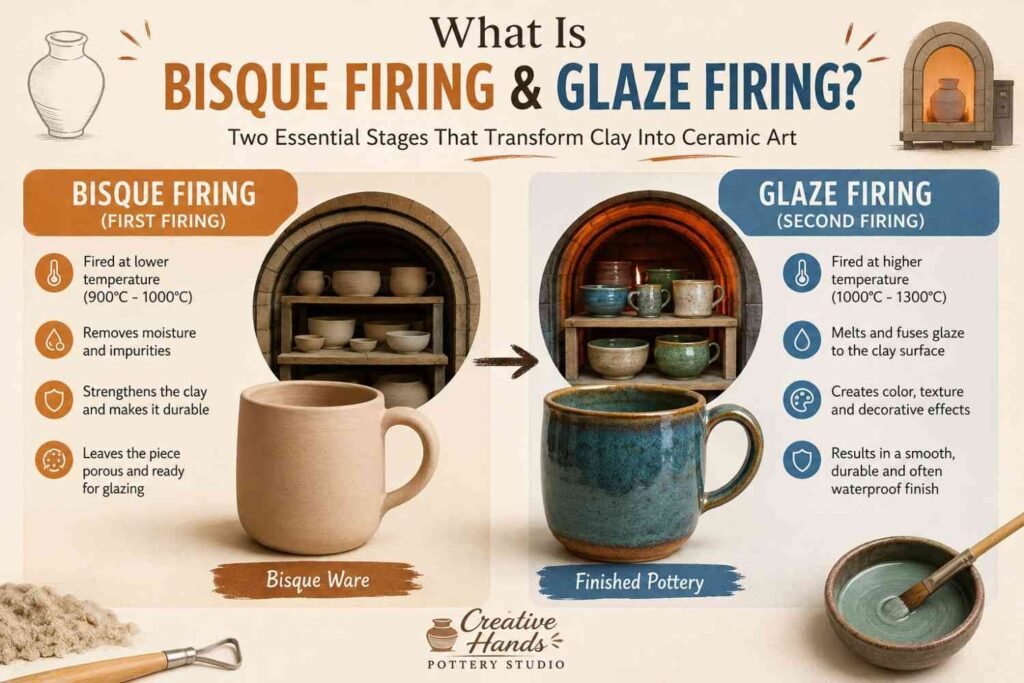
Pottery goes beyond shaping clay into stunning forms. The underlying process behind every ceramic mug vase, bowl or other decorative item is an expertly managed firing procedure that transforms the soft clay into tough pottery. One of the two crucial processes in the making of ceramics is the bisque firing as well as glazing firing.
If you’ve been to the pottery workshops or wondered how hand crafted ceramics are made, understanding the two firing techniques can help you recognize the science and art behind the creation of pottery. In this tutorial, Creative hands pottery studio will explain everything you should learn about bisque firing as well as glaze firing, including their purposes in the process, their different aspects, and their importance in the process of making ceramic.
What Is Bisque Firing?
The bisque firing process is very first firing a clay item goes through after it has been shaped and dried completely. This step transforms fragile clay that has not been fired – also known as greenware into a tougher and more durable product known as bisque ware.
When firing bisque it is gradually heated in a kiln until it reaches an appropriate temperature, usually between 900degC and 1,000degC according to the type of clay employed.
Purpose of Bisque Firing
The principal goals of firing bisque include:
- Eliminating any moisture remaining from the clay
- In the process of burning organic materials, you can remove impurities
- The clay body is strengthened
- Making it easier to carry and also to decorate
- Preparing the surface to be glazed
Without bisque firing using glaze directly on greenware is difficult as the clay is fragile and easily break when handled.
What Happens During Bisque Firing?
When the temperature of the kiln rises the kiln temperature increases, a variety of significant changes take place:
- The clay’s water vapor evaporates.
- Organic matter is a thing that burns away.
- The clay particles start to bond.
- The item is permanently bonded.
- Ceramic remains sufficiently porous to take in glaze.
After this process, clay is strong but capable of absorbing glazes which makes it ready for the next stage.
Learn more about the importance of ceramic finishes in our detailed guide on what is the purpose of glaze on pottery in ceramic art, and discover how glazing enhances the beauty, durability, and functionality of handmade pottery.
What Is Glaze Firing?
Glaze firing is a second firing procedure that takes place after the glaze has been affixed to the bisque-fired object. In this phase, the glaze melts, and then fuses to the surface of the ceramic and creates an attractive, smooth and, often, waterproof surface.
The temperature of firing for glazes varies based on the glaze and clay type; it usually ranges from 1,000degC to 1,300degC.
Purpose of Glaze Firing
Glaze firing has several key roles:
- Forms an environment that is protected
- Color and decorative effects are added.
- It makes pottery safe for eating when appropriate glazes are used.
- Enhances the durability
- Produces glossy, satin or matte surfaces
This is the stage at which ceramic truly transforms into a completed ceramic item.
What Happens During Glaze Firing?
After the glazed pottery has been warmed:
- The glaze’s components start to melt.
- The glaze bonds to the clay’s body.
- Chemical reactions produce color and textures.
- The surface is soft and smooth. It is then sealed.
- The final appearance changes as the kiln gets cooler.
The process of cooling is just as crucial as the heating process, since it can affect what color and texture and final look that the glaze will have.
Why Are Both Firing Stages Important?
Both firing processes play important parts in the production of ceramic.
Bisque firing helps prepare glaze-ready clay by making it stronger and more comfortable to work with. Glaze firing further enhances the look and function of the clay by creating the appearance of a durable surface.
Failure to follow either of these steps could result in low-quality glaze imperfections, pottery as well as damaged pottery pieces. Professional potters take care to regulate the firing process to ensure gorgeous and consistent results.
useful link : pottery workshop
Common Issues During Firing
Problems During Bisque Firing
- Cracks due to moisture trapped
- Warping as a result of inconsistent drying
- Explosions triggered by clay caused by wet
- Surface defects caused by contamination
Problems During Glaze Firing
- Glaze flowing onto the shelves of the kiln.
- Bubbles or pinholes in the glaze
- Ceasing (fine fractures of the glaze)
- Uneven color development
An efficient kiln operation as well as proper preparation will help to minimize the risk of these problems.
If you’re new to clay art, our guide to Hand Building in Pottery explains one of the most accessible and creative ways to create beautiful ceramic pieces without using a pottery wheel.
How Long Does Each Firing Take?
The timing of firing is based on the size of the kiln and the temperature specifications.
Bisque firing time: Typically, 8–12 hours with cooling time.
Glaze firing time: Usually between 8 and 14 hours, with cooling times.
A lot of potters allow the kiln to naturally cool for several hours prior to opening it in order to avoid the risk of thermal shock.
You may also ask to read, best pottery workshops near me in uae
Learn Pottery at Creative Hands Pottery Studio.
In the Creative hands pottery studio we assist beginners and seasoned artists to explore every step of the process. From wheel throwing and hand-building to kiln firing and glazing Our workshops provide an experience that is hands on to the amazing universe of clay.
If you’re interested in making personal ceramics, learning techniques for pottery, or enjoying an enjoyable time with your loved ones Our studio is an inspiring space to build your talents as an artist.
It is also possible to explore other options that include:
- Pottery wheel on the wheel
- Ceramic painting
- Family pottery experiences
- Couple pottery workshops
- Pottery classes for kids
- Seasonal celebrations
Conclusion
Our pottery studio in Ras Al Khaimah combines professional instruction, quality materials, and a relaxing environment to inspire creativity. Knowing the distinction between glaze firing and bisque firing is vital for anyone who is interested in pottery and ceramics. Bisque firing strengthens and prepares the clay while glaze firing adds beauty strength and utility to the final work.
Together both of these firing stages transform ordinary clay into enduring ceramic art. If you’re just starting out or a veteran enthusiast learning about the firing process will increase your appreciation for hand made ceramics the skill behind each piece.
Visit Creative Hands Pottery Studio to experience the complete pottery journey—from shaping clay to seeing your creations emerge beautifully transformed from the kiln.
FAQ
While some techniques require firing in a single fashion, most ceramic artists favor bisque firing because it reduces the possibility of damage as well as improves the application of glaze.
An average bisque fire will take between 8 and 12 hours. This is followed by a few hours of cooling.
Glaze firing typically can take between 8 and 14 hours according to the size of the kiln used as well as the type of clay used and the firing temperature.
Bisque firing is designed to leave the pottery porous, so that it will absorb glaze well prior to firing.
Incorrect firing can cause crack warping, cracks, glaze defects or weakening of ceramic structures.
